Tolkien and the Great War: The Threshold of Middle-earth
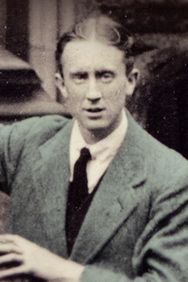 ‘The best book about Tolkien that has yet been written’ — A.N. Wilson
Mythopoeic Scholarship Award winner
◼︎ What the readers and critics say
◼︎ Editions in nine languages (with bookstore links)
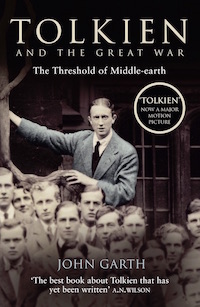
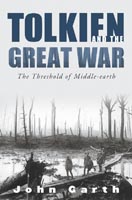
The only substantially new biography of Tolkien since 1977, Tolkien and the Great War reveals how Middle-earth was created in the crucible of world conflict by a brilliant, passionate and wildly imaginative young man. Drawing on the unpublished letters of Tolkien and his closest friends, John Garth tells a deeply moving story. Middle-earth, he shows, is no escapist fantasy but an eloquent counterblow against the disenchantment that has haunted us since the First World War.
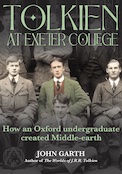 You might also like Tolkien at Exeter College: How an Oxford undergraduate created Middle-earth, the richly illustrated supplement to the story told in Tolkien and the Great War. Originally published in 2014, Tolkien at Exeter College was nominated for a Mythopoeic Award and described as ‘a must-read for all Tolkien aficionados’. The new 2022 edition has further information, insights and images, all on higher-quality paper in a colour cover. Buy here...
Responses to Tolkien and the Great War
• ‘An incredibly touching portrait of four friends and the suffering that was inflicted on men of a certain historical moment by one of history’s most senseless wars. This biography will give you a very good sense of both this man and this moment as well as giving you a new angle from which to see his fiction. I am not usually an avid reader of biography, but I couldn’t put this down.’ Rebecca
• ‘Amazing! A must read for any Tolkien fan! It will really blow your mind and kinda break your heart.’ Steve Owens
• ‘A necessary book ... a thoughtful, sensitive, well-written consideration of the WWI generation, and how the pre-War world and the War itself formed Tolkien and his fellowship of four friends. It is the best kind of cultural–literary criticism...’ Moira Russell
• ‘Shows a gregariousness and power in Tolkien's personality that isn’t very apparent in previous work like Carpenter’s biography or even Letters by Tolkien.’ David Eden
• ‘Brilliant, absorbing, and detailed … A must read for anyone interested in the background of the man behind Middle-earth.’ Sarah
• ‘An incredible work, that almost makes me wish I had stayed an English major all those years ago … A worthwhile read for those interested in the Great War, Middle Earth, or the general effect of war on literature.’ Aaron
• ‘A deeply moving book, well-written, detailed, it cogently draws out the threads of the influence of Tolkien's wartime experiences on his writings.’ Sandi
• ‘One of the most important and thoroughly researched works on the early Tolkien. I highly recommend this and especially hearing John Garth read it. A must for any lover of Tolkien.’ Andrew Higgins
• ‘A wonderful, thought provoking work for those in love with Lord of the Rings.’ Padraic
All these and more at Good Reads...• ‘Very much the best book about J.R.R. Tolkien that has yet been written ... Even if you are not a Lord of the Rings fan, I commend this ... I have rarely read a book which so intelligently graphed the relation between a writer’s inner life and his outward circumstances.’
- A.N. Wilson, Evening Standard, 2003. Read more...
• ‘Garth’s masterpiece – it really is one...’
Daily Telegraph, 2006. Read more...
• ‘A highly intelligent book … Garth displays impressive skills both as researcher and writer.’ - Max Hastings, Sunday Telegraph. Read more...
• ‘Journalist Garth combines a newsman’s nose for a good story with a scholar’s scrupulous attention to detail ... Brilliantly argued.’ - Daily Mail. Read more...
• ‘Powerful, persuasive and deeply moving, sending one back to read with fresh eyes of that band of brothers, the Fellowship of the Ring.’ Christopher Hart, Daily Telegraph. Read more...
• ‘A study of this kind requires its author to wear many hats: archival researcher, military historian, literary critic, ancient philologist. Garth diligently fulfills all of these responsibilities.’ The Lion and the Unicorn. Read more via Project Muse...
Supplementary writings
My 2014 monograph Tolkien at Exeter College: How an Oxford undergraduate created Middle-earth brings new research to bear on Tolkien's life from 1911 to 1915 and includes many images, including several previously unseen pictures by or of Tolkien. Buy here...
More information about a key figure in Tolkien and the Great War is published in ‘Robert Quilter Gilson, T.C.B.S.: A brief life in letters’, Tolkien Studies 8. An incident which would have appeared in the book if I had known about it at the time is described in ‘J.R.R. Tolkien and the boy who didn’t believe in fairies’, Tolkien Studies 7. Readers with access to Project Muse can read these two articles here and here.
War in Tolkien’s Middle-earth, 1916
Tolkien's earliest mythology:
Middle-earth as it stood in 1916
Chronology of Tolkien in the Battle of the Somme
Tolkien and the Great War cited in the Oxford English Dictionary
Tolkien and the Great War: The Threshold of Middle-earth |
Tolkien i Pierwsza Wojna Światowa |
Tolkien y la Gran Guerra: El Origen de la Tierra Media |
Tolkien und der Erste Weltkrieg: Das Tor zu Mittelerde |
Tolkien e a Grande Guerra: O Limiar de Terra-média |
Толкин и Великая война: На пороге Средиземья |
Tolkien si Marele Razboi. Originile Pamantului de Mijloc |
Tolkien and the Great War: The Threshold of Middle-earth |
Tolkien et la Grande Guerre |
Tolkien e la Grande Guerra. La soglia della Terra di Mezzo |
托尔金与世界大战——跨过中土世界的门槛 |
Tolkien and the Great War |
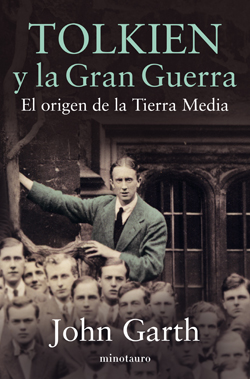
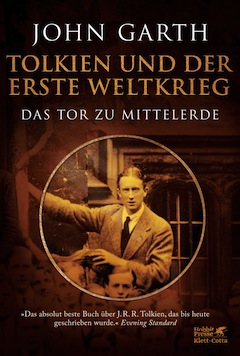
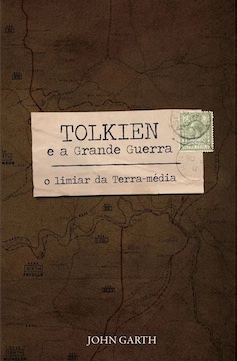
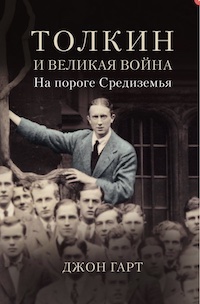
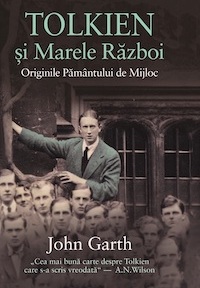
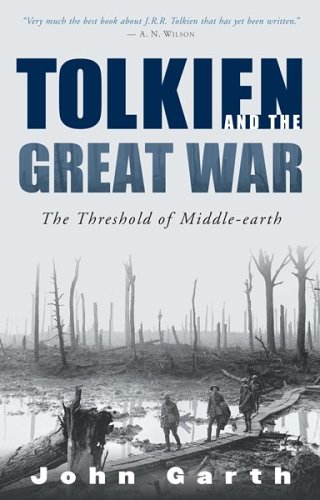
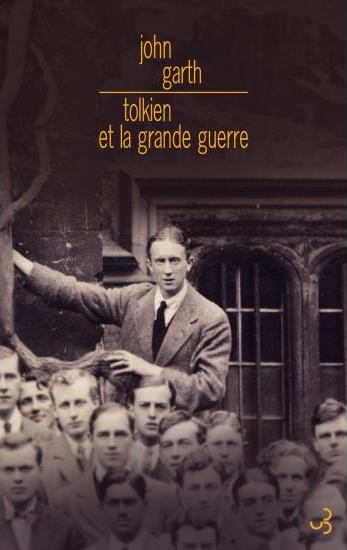
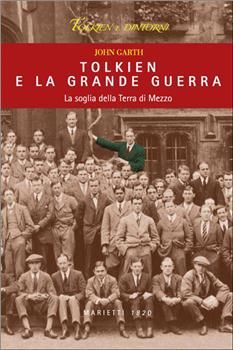
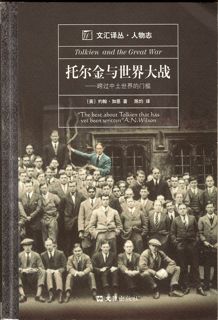
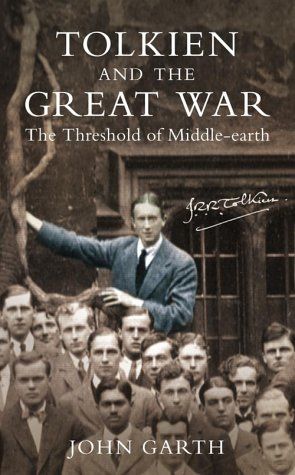
* HarperCollins 2003 and 2004 editions out of print. Wenhui edition unavailable.
The Worlds of
J.R.R. Tolkien
UK hardback
US hardback
To buy in French, Russian, Czech, Spanish, Italian, Finnish, Hungarian, German, or another language
see links here
Buy
Tolkien and
the Great War
UK paperback/ebook
US paperback/ebook

Audiobook read by
John Garth
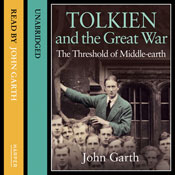
Amazon UK, Audible UK,
Audible US
To buy in Italian, German, French, Spanish or Polish,
see links here
Buy
Tolkien at
Exeter College