Featured articles
Here you will find highlights of my writings on a whole range of topics, with links to articles on this website and to others including national and international news media. Links to further articles can be found in my overviews of my journalism, my book reviews and my writings on Tolkien.
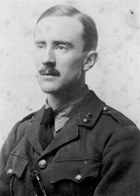 |
War in Tolkien’s Middle-earth, 1916 Middle-earth sprang to life during the First World War, and the two were entwined from the beginnings of Tolkien’s mythology. In Tolkien and the Great War, I piece together how this stood just before he went off to fight in the Battle of the Somme in summer 1916 – and in The Book of Lost Tales which he began straight after the battle. The impact of war and of battle itself are clear. Read... |
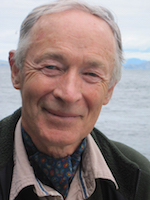 |
The time traveller I interview Tim Severin about his famous ‘Brendan Voyage’ across the Atlantic in a replica sixth-century leather boat, and about the undergraduate adventure that started it all off: retracing Marco Polo’s route to China — on a motorbike with Boris Johnson’s dad. Read at Oxford Today. |
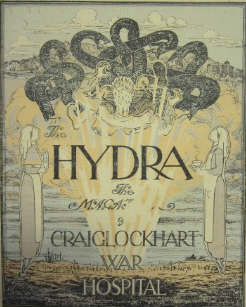 |
Secrets of The Hydra: How I uncovered lost issues of Wilfred Owen’s First World War magazine Historic lost issues of a magazine edited by poet Wilfred Owen have been found and donated to archives in Oxford, in a move hailed in the press as ‘a stunning discovery’. What has not been revealed until now is the part played in the discovery by J.R.R. Tolkien, hard research and serendipity. Read at my blog, or (shorter) at Oxford Today. |
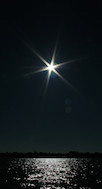 |
Birth of a new world: the Tolkien poem that marks the genesis of Middle-earth A century ago, the 22-year-old Tolkien wrote a poem about a mariner who sails off the earth into the sky. ‘The Voyage of Éarendel the Evening Star’ deserves its day in the spotlight alongside war commemorations – it was the founding moment of Middle-earth. In a widely read Guardian article, I outline the results of a full-scale investigation I’ve written for Tolkien Studies 11. And I give further insights at my blog (also in Italian). |
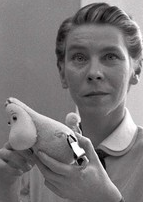 |
Tove Jansson, queen of the Moomins The international children’s laureate of disaster and displacement was born one hundred years ago, just as Europe was going to war. Tove Jansson is most famous for creating the Moomins, a family of hospitable and adventuresome trolls. Today, there is a thriving Moomin-industry around them: a theme park, a museum, a movie is on its way. But she ended up longing to escape her creations. At the Daily Beast. |
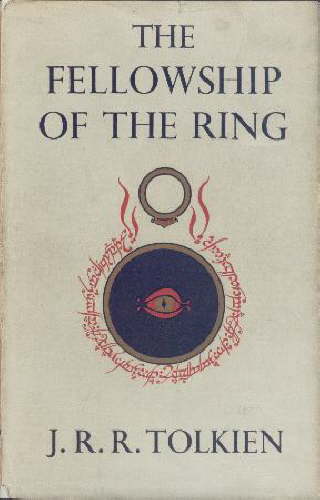 |
Why the First World War is at the heart of The Lord of the Rings In an article for the Daily Beast on the 60th anniversary of the publication of The Fellowship of the Ring, I ask why Tolkien was so inspired by the Great War – and by a group of schoolfriends (also in Portuguese). It is a question I first explored in an Evening Standard article in 2001, while I was writing Tolkien and the Great War, and more recently for the Telegraph ‘Inside the First World War’ series. |
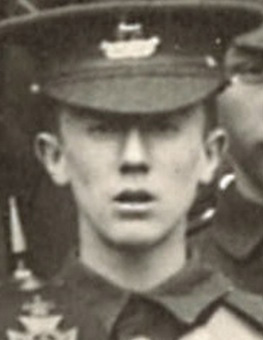 |
Tolkien at 15, a warrior-to-be A newly discovered photograph reveals J.R.R. Tolkien at fifteen in his school’s new cadet corps – launched in 1907 as nations geared up for war. Drawing on my extensive research in the school archive, I reveal the full facts behind the picture of 120 boys from a generation born at the wrong time. At my blog. |
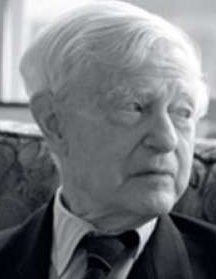 |
Bluff, guile and swagger behind enemy lines In July 1940 the Special Operations Executive was formed on Winston Churchill’s orders with a mission “to set Europe ablaze”. For Oxford Today, I talk to Britain’s most decorated living war veteran, Sir Tommy Macpherson, about how he used his wits – and kilt – to bamboozle German forces. |
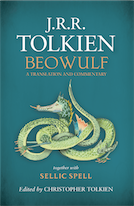 |
A key to Middle-earth: Tolkien’s Beowulf ‘Tolkien’s view of Beowulf as a marriage of fairy story and history explains his rationale in constructing for his own grand fairy story a world so convincing in its “historical” detail that many feel they have been there.’ My review of Tolkien’s long-awaited Beowulf: A Translation and Commentary, together with ‘Sellic Spell’, for the New Statesman. My earlier preview piece for the Guardian defends the edition, by his son Christopher, against the inevitable allegations of barrel-scraping. |
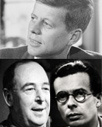 |
Three great men died that day: JFK, Lewis, and Huxley On 22 November 1963, three towering figures of the 20th century died. John F. Kennedy is the one we all remember, but his assassination overshadowed the deaths of C.S. Lewis and Aldous Huxley. Published as a long-form essay at the Daily Beast and as a shorter feature at Oxford Today. |
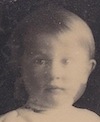 |
Tolkien and the boy who didn’t believe in fairies Voted best article in the Tolkien Society Awards 2014: my exploration of the incident that first taught Tolkien fairy-stories are not kids’ stuff. ‘I have never read a scholarly paper that left me more thoroughly charmed,’ said veteran Tolkien scholar David Bratman when Tolkien Studies first published it. Previously unseen pictures. In English and Spanish. |
 |
The storyteller: an interview with Alan Garner Alan Garner’s brief years as an undergraduate at Oxford heavily influenced his children’s fantasy tales and have resonated across 50 years. Here I meet the author of landmark books including The Weirdstone of Brisingamen, The Owl Service and Boneland, who is one of the subjects of a major Bodleian exhibition. Read at Oxford Today. |
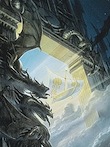 |
Tolkien’s earliest Middle-earth mythology, 1915–1916 Tolkien’s Middle-earth in its beginnings looked as different from the world of The Hobbit, The Lord of the Rings and The Silmarillion as an acorn does from an oak tree. In this extract from Tolkien and the Great War, I piece together how it stood just before he went off to fight in the Battle of the Somme in summer 1916. Available in English and French. [Picture: John Howe] |
 |
Portrait of a lady: an interview with Aung San Suu Kyi ‘I’ve never felt I was a pawn of any person, any country or any organisation. I’m doing what I’m doing because I believe in it...’ The Burmese democracy leader speaks exclusively to me in her only UK print interview during her historic visit to Britain for the first time since leaving in the 1980s. Read at Oxford Today. |
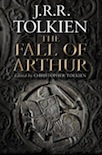 |
Review: The Fall of Arthur, Tolkien’s unfinished epic Among the most tantalising of Tolkien’s many abandoned projects is his dark and brooding poem about the downfall of King Arthur. Laid aside for decades, The Fall of Arthur has finally been published. Here I explain how he planned to link the Arthurian world with his tales of Middle-earth, and how it also paved the way for The Lord of the Rings. Read at The Daily Beast, or in French at Tolkiendil or Portuguese at Tolkien Brasil. |
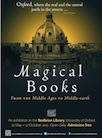 |
The Magical Books of the Bodleian Lucy’s entry through the wardrobe into Narnia transformed me at the age of six into a glutton for books, and since then other passages to other worlds have followed. Now, a Bodleian Library exhibition celebrates the work and inspirations of C.S. Lewis, J.R.R. Tolkien, Alan Garner and others. Read at Oxford Today. |
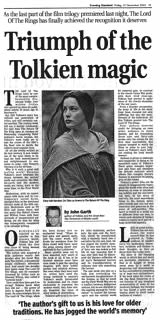 |
Tolkien’s gift First published in the Evening Standard to mark the premiere of Peter Jackson's The Return of the King and the final of the BBC's Big Read, in which The Lord of the Rings was named Britain's best-loved book. The Lord of the Rings must be one of the most comprehensively dismissed books ever written. But Tolkien’s story has outlived one generation of critics and will outlive another. Like Homer’s Odyssey, it is for all time. Why? Because it bestrides the chasm between the ancient world and ourselves. His Middle-earth and the modern world are twins, born at the same time, in the First World War. Read more... |
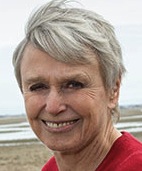 |
Writing Ghost Hawk: an interview with Susan Cooper ‘My imagination is rooted in Britain, and always will be; but gradually it’s been crossing the Atlantic,’ says Susan Cooper. It has made landfall with Ghost Hawk, her impassioned novel on the encounter between Puritan settlers and Native Americans. I talk to the Newbery Medallist and author of the classic Dark Is Rising sequence at the Daily Beast. |
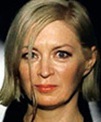 |
Beatnik girl: Turner Prize winner Elizabeth Price ‘It was thrilling but I also felt quite solemn, because there had been so many really hard years...’ My interview with video artist Elizabeth Price traces the unexpected twists and turns in a career that has taken her from the fringes of Eighties Indie pop to the 2012 Turner Prize, via the subterranean labyrinth of the Bodleian Library. Read at Oxford Today. |
 |
The OED unbound: the digital future of the Dictionary When James Murray was appointed as first editor of the Oxford English Dictionary in 1879, he never foresaw the scale of the undertaking. He could not possibly have imagined what it is today – a doorway into a lexical world accessible from desks and laptops globally. Outgoing editor John Simpson speaks to me for Blueprint. Read more... |
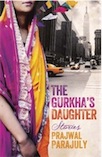 |
Review: The Gurkha’s Daughter, by Prajwal Parajuly The narrator of ‘The Immigrants’, the final story in this collection, surely expresses Prajwal Parajuly's own exasperation when he says of New York: ‘When I told people I was of Nepalese origin, they instinctively asked me if I had climbed Mount Everest.’ These eight snapshots of the Nepali-speaking diaspora in India, Bhutan, Nepal and Manhattan should do much to correct such stereotypes. Read at The Guardian. |
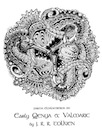 |
Tolkien’s Elvish creation: reviews of Parma Eldalamberon For Tolkien, the word came before the world. Yet his claim that he created Middle-earth to house his invented languages has served mainly to raise sceptical eyebrows. In the journal Parma Eldalamberon, the on-going publication of his work on these languages and their scripts is remedying this. Read my reviews of issues 13 & 14 and 15. |
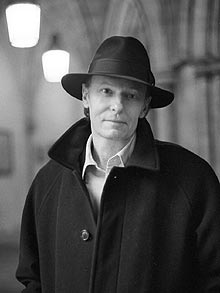 |
Michael Cox and The Meaning of Night Michael Cox, whose neo-Victorian thriller The Meaning of Night I reviewed for the Evening Standard, had previously copy-edited my Tolkien and the Great War. Just as he started work on my typescript in June 2003, Michael (photo: Jerry Bauer) had to undergo a serious operation. All I knew was he had some kind of cancer. Read more... |
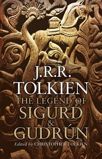 |
Review: Tolkien’s The Legend of Sigurd and Gudrún The first Tolkien epic not to be set in the world of The Lord of the Rings or some other version of Faërie, The Legend of Sigurd and Gudrún tells the story of Germanic epic’s greatest dragonslayer and his doomed kindred. It is a daunting, uncompromising affair, but reveals at last a vital missing link with the Northern myths and legends that famously helped inspire Middle-earth. Read more... |
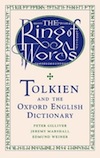 |
Review: The Ring of Words: Tolkien and the Oxford English Dictionary, by Peter Gilliver, Jeremy Marshall and Edmund Weiner As The Ring of Words demonstrates, J.R.R. Tolkien’s mode of creativity is the close artistic equivalent to the philosophy and technique behind the OED, and the range, detail, depth and scale of his imaginative enterprise follows inevitably.. Read more... |
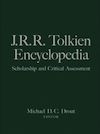 |
J.R.R. Tolkien Encyclopedia (Drout) and J.R.R. Tolkien Companion and Guide (Scull and Hammond) Tolkien encyclopedias have been around for years, detailing his imagined world but not treating his books as literature. As a sign of the coming of age of Tolkien studies, two substantial works of reference now abundantly make up for this lack. Read more... |
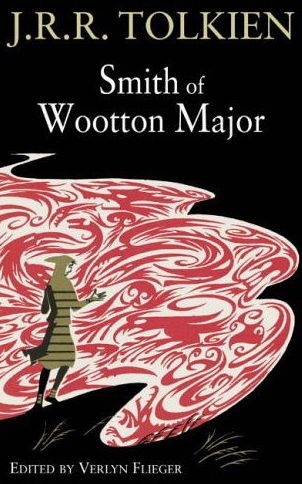 |
Review: Smith of Wootton Major by J.R.R. Tolkien, edited by Verlyn Flieger When Tolkien set about writing an introduction to one of George MacDonald's fairy-tales, he quickly realised he didn’t much like MacDonald’s moral allegory, and he would rather make his points about fairy-tales by creating one himself. He never finished the introduction. Instead, we have Smith of Wootton Major: a counter-story to cure us of the notion that fairy-tales are only for children. Read more... |
 |
Two online interviews with John Garth In wide-ranging Q&A sessions with Michael Martinez of the Middle-earth and J.R.R. Tolkien blog and Pieter Collier of TolkienLibrary.com, I talk about Tolkien’s war experiences and how they meshed with his other inspirations, and I give some of the background to how I came to write Tolkien and the Great War. |
The Worlds of
J.R.R. Tolkien
UK hardback
US hardback
To buy in French, Russian, Czech, Spanish, Italian, Finnish, Hungarian, German, or another language
see links here
Buy
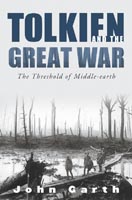
Tolkien and
the Great War
UK paperback/ebook
US paperback/ebook

Audiobook read by
John Garth
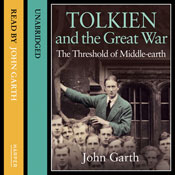
Amazon UK, Audible UK,
Audible US
To buy in Italian, German, French, Spanish or Polish,
see links here
Buy
Tolkien at
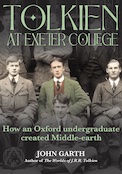
Exeter College