Welcome
 I’m an author, freelance writer and editor. Known worldwide for my award-winning work on Tolkien, I talk and teach internationally.
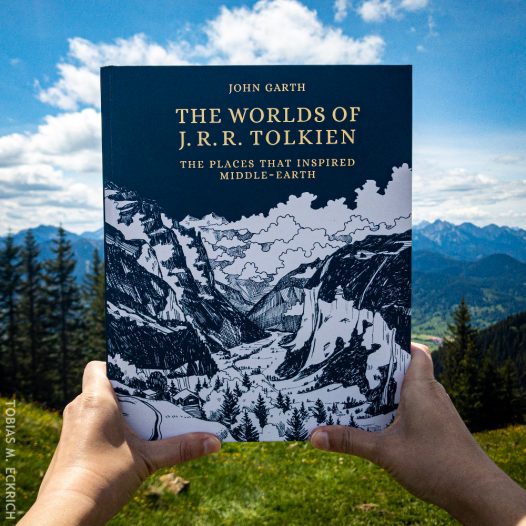
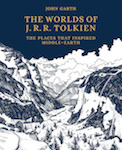
My latest book, The Worlds of J.R.R. Tolkien: The Places that Inspired Middle-earth, is published by Frances Lincoln in the U.K. and Princeton University Press in the U.S. It has been translated into 14 languages (French, Russian, Spanish, Finnish, German, Czech, Italian, Hungarian, Simplified Chinese, Japanese, Polish, Croatian, Slovak and Serbian). Read reviews and buy…
Here you will find more about Tolkien and the Great War, my influential, award-winning book about the origins of Middle-earth and Tolkien’s friendships amid the First World War. Here you can also buy your copy of the new, revised and improved 2022 edition of Tolkien at Exeter College, a vital and richly illustrated book on the key undergraduate years when Middle-earth was conceived.
And you can find:
- Links to my current blog, where you can support my writing and research.
- Highlights of my articles and old blog.
- Links to my Instagram, BlueSky, X, Facebook, and LinkedIn.
- Overview of my journalism and book reviews for the press.
- Details and links for my publications, talks and media appearances.
- Contact details for comments, questions and commissions.

News
This website has been in hiatus; I will update it when I can. Meanwhile, head over to my new blog to read and follow my recent writing and research.
2025
My 2025 with Tolkien – from Faërie to Minnesota
2024
2024: My year of Tolkien and tribulation
12–18 July 2026: I teach my annual one-week course on Tolkien and CS Lewis in Oxford for the Oxford Experience residential summer programme, in the grand surroundings of Christ Church. Course now full.
July–August 2026: I teach three all-new courses for the Inspiring Oxford residential summer school, at Brasenose College in the heart of Oxford:—
►Tolkien, the Great War and the Beginnings of Middle-earth (19–25 July) Spaces still available!
►Tolkien, Lewis and beyond: the Oxford fantasy tradition (26 July–1 August) Spaces still available!
►Building Middle-Earth: Tolkien’s Geography and the Power of Place (9–15 August) Spaces still available!
16–22 August 2026: I teach my annual one-week course, An Introduction to Tolkien’s Mythology for the Oxford Experience at Christ Church. Course now full.
16–22 August 2026: I speak on The Undiscovered Tolkien at the Undiscovered C.S. Lewis Conference, George Fox University, Oregon.
2023
Summer 2023, 2024 and 2025: I taught my annual one-week courses on Tolkien and CS Lewis in Oxford and An Introduction to Tolkien’s Mythology for the Oxford Experience residential summer programme, in the grand surroundings of Christ Church.
 21 May 2023: New YouTube list of my talks, interviews and panel discussions about Tolkien.
17 May 2023: The Worlds of J.R.R. Tolkien is named a finalist for the Mythopoeic Scholarship Award in Inklings Studies for the third year running.
14 May 2023: My blog hosts a guest post by Allan Turner, ‘The mood music of G.B. Smith, T.C.B.S.’
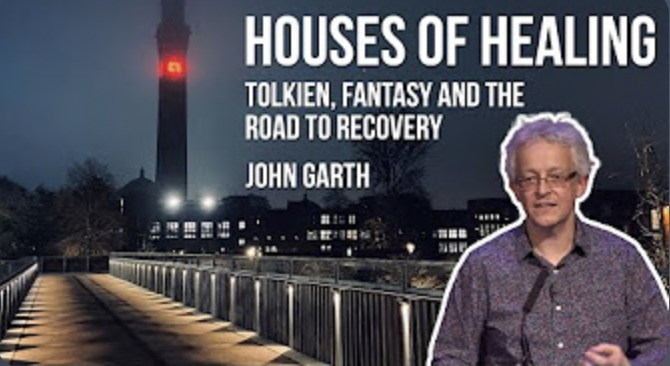
12 May 2023: I delivered the second Annual Tolkien Lecture at the University of Birmingham: ‘The Houses of Healing: Tolkien, Fantasy, and the Road to Recovery’. Watch here…
2 May 2023: I guest on the History Hit podcast of celebrated TV historian Dan Snow to tell him about Tolkien, his First World War experiences, and their impact on his Middle-earth writings.
26 April 2023: My in-depth review of Tolkien’s late papers on ‘Time and Ageing’ (The Nature of Middle-earth, edited by Carl F. Hostetter) is published in Tolkien Studies volume 19. Requires Project Muse access.
5 April 2023: ‘Toad to Tode’, a blog-post mash-up of The Wind in the Willows with Tolkien’s ‘The Mewlips’.
28 March 2023: Shortlisted for the Tolkien Society Awards 2023 for my Smithsonian Magazine article ‘How J.R.R. Tolkien came to write the stories of “The Rings of Power”’. The Great Tales Never End: Essays in Memory of Christopher Tolkien, containing my chapter on ‘The Chronology of Creation’, is shortlisted for the best book award.
28 March 2023: At the Oxford Literary Festival, I join editor Richard Ovenden, fellow contributor Stuart Lee and host Grace Khuri to discusss The Great Tales Never End: Essays in Memory of Christopher Tolkien.
25 March 2023: I launch a crowdfunding project in support of my research and writing on Tolkien. You are most welcome to support my work!
24 March 2023: New blog post, Making an ass of yourself, with Geoffrey Bache Smith, based on a confession I made in the G.B. Smith conference (also on video).
21 March 2023: At the conference on G.B. Smith and J.R.R. Tolkien: a meaningful friendship hosted by Corpus Christi College, Oxford, I give the opening talk, ‘A Perfect Genius’: G.B. Smith among Family and Friends’ (video).
I have a wealth of expertise in journalism and editorial as well as in Tolkien. I will be delighted to consider invitations – especially commissions – from media, academia, publishers and private individuals. Contact me here and I’ll get back to you as soon as I can.
Journalism for clients including The Times, Telegraph and Oxford University includes interviews with Oscar-winning artist Alan Lee and features on the war against malaria, the heritage industry and its ethics, and many more topics. I have interviewed Newbery-winning novelist Susan Cooper, polemicist Naomi Wolf, Pulitzer winner Siddhartha Mukherjee, Burma’s Aung San Suu Kyi, broadcaster and writer Ruby Wax, Booker Prize nominee Alan Garner, and Sir Tommy Macpherson (then Britain’s most decorated living soldier). I first trained as a reporter on London papers.
Talks and media appearances: On Tolkien and related subjects, I speak in front of general and specialist audiences internationally and give interviews on television, radio and online.
Consultancy: For the BBC, I acted as a consultant on the 2016 Sleuths, Spies and Sorcerers: Andrew Marr’s Paperback Heroes and advised on the 2014 War of Words: Soldier-Poets of the Somme. For CBS’s Gamespot Universe, I advised on a True Fiction YouTube episode about Tolkien and war. In Oxford, I have assisted the Story Museum in its developmental planning and Exeter College in cataloguing its Tolkien-related archives. I have helped several Tolkien scholars in the interpretation of his manuscripts, and acted as a review panellist on Vinyar Tengwar, which publishes his writings on his invented languages. I was historical consultant for Simon Tolkien’s First World War novel No Man’s Land.
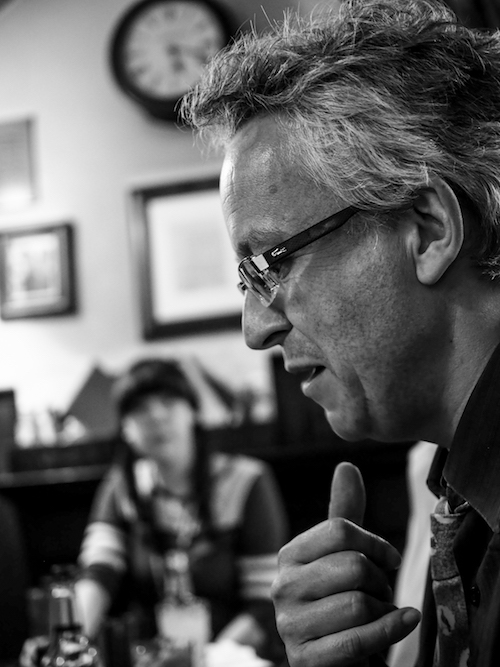 Teaching: ◼︎︎ My one-week Oxford University summer school courses on Tolkien and CS Lewis in Oxford and An Introduction to Tolkien’s Mythology run again in 2023. (Photo by Amy Pass, above right: I read to my students at the Eagle & Child pub, the Inklings' haunt.) ◼︎︎ My 12-week Signum University course on The Worlds of J.R.R. Tolkien ran in 2020. ◼︎︎ My 12-week Signum University course on Tolkien’s Wars and Middle-earth (for students seeking MA credit) ran in 2015, 2017 and 2020, and runs again in 2021. ◼︎ I taught two semester-length courses for graduates and undergraduates at the University of Nevada in Las Vegas in 2016: heroic epic and Tolkien as a major British author. ◼︎ I jointly taught an Oxford summer school course in 2014 on Tolkien and Oxford. ◼︎ I have tutored US undergraduates on study abroad for Oxford University.
 |
 |
Book reviews by me have appeared in The Guardian, New Statesman, Daily Beast, Sunday Telegraph, Times, Observer, Mail On Sunday, Evening Standard, Times Literary Supplement and elsewhere, dealing with modern historical fiction, contemporary short stories, fantasy, medieval literature, literary reference, biography, and lexicography.
Editorial: I’ve worked in new media, newspapers and books. I was an Evening Standard sub-editor for more than a decade, and digital editor of Oxford Today, the University magazine. Highlights of my copy-editing work include Martin Edwards’ ‘superbly compendious and entertaining’ Golden Age of Murder, winner of Edgar, Agatha, Macavity and H.R.F. Keating awards; as well as Howdunit: A Masterclass in Crimewriting by Members of the Detection Club, edited by Edwards (and also indexed by me). Regular proofreading work has included books by Robin Hobb, Simon Tolkien, Ben Aaronovitch, Robin Hobb, Patrick O’Brian, E.R. Eddison and Agatha Christie.
Research: I am currently exploring Tolkien’s creativity against the dark background of his times in Tolkien’s Mirror, the book I began as a visiting fellow of the Black Mountain Institute. ◼︎ My work on the timeline of Tolkien’s writings, involving manuscript research at Oxford’s Bodleian Library and Marquette University’s Raynor Memorial Libraries in Milwaukee, has led to a paper in The Great Tales Never End: Essays in Memory of Christopher Tolkien reappraising when Tolkien wrote his Book of Lost Tales. ◼︎ For Tolkien and the Great War I examined Tolkien’s personal papers at the Bodleian; military papers at the National Archives, Kew, and the Imperial War Museum; rare publications at the British Library; and the lie of the land on the Somme battlefields. ◼︎ Supplementary research in college archives and elsewhere led to Tolkien at Exeter College. ◼︎ My research on one of Tolkien’s friends, killed on the first day of the Battle of the Somme, has led to a documentary film, R.Q. Gilson: Memoirs of an Infantry Officer, and a play by Mike Levy commemorating his battalion, I Regret to Inform You. ◼︎ Research on another of their circle, G.H. Bonner, led to the rediscovery of lost issues of the historic Hydra magazine, edited variously by Bonner and war poet Wilfred Owen. ◼︎ I researched and wrote the chronology for Agatha Christie’s The Grand Tour, about her round-the-world 1922 trip, filling gaps she left in her account.
On Tolkien
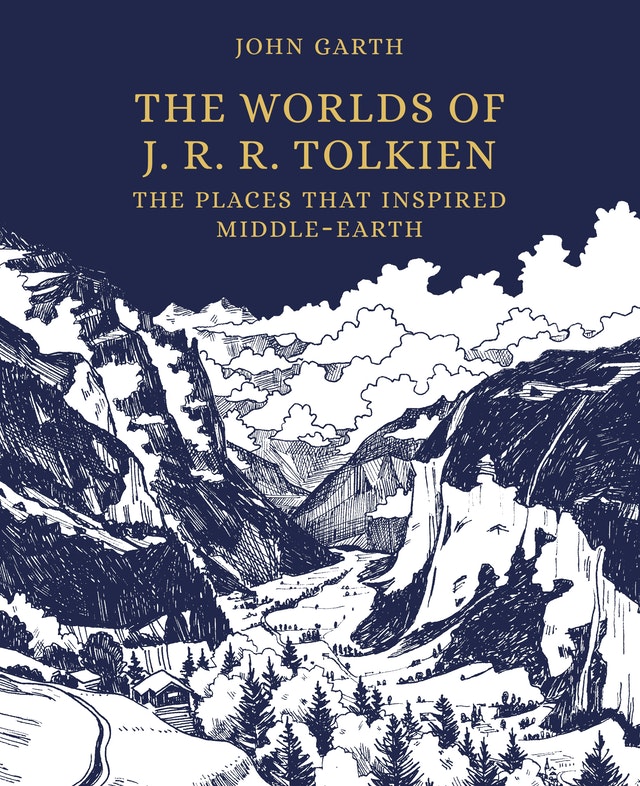 The Worlds of J.R.R. Tolkien: The Places that Inspired Middle-earth (2020) is the authoritative exploration of the real-world locations that lie behind the legendarium, and the wider inspirations behind Middle-earth’s incomparably rich landscapes, realms, towers, and more. Packed with insights and gorgeous images, including many artworks by Tolkien. Now in 15 languages. Three-time finalist in the Mythopoeic Awards.
◼︎ ‘Magnificent. The commentary is great, really thoroughly researched; the pictures are stunning’ — Tom Shippey, author of The Road to Middle-earth.
◼︎ Read an excerpt …
◼︎ Reviews and bookstore links …
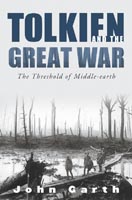
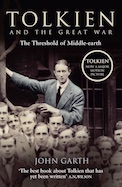 Tolkien and the Great War: The Threshold of Middle-earth won the Mythopoeic Award for Scholarship and was hailed on publication in 2003 as ‘the best book that has been written about Tolkien’. At the time it was the only substantially new narrative biography of Tolkien since 1977, and it remains only the second to have been written with access to Tolkien’s personal papers at the Bodleian Library in Oxford. It has been published in the UK, Germany, France, Spain, Italy, China, Poland, Russia and Romania; and is also available as an audiobook in English (voiced by the author) and in German.
◼︎ Read more here…
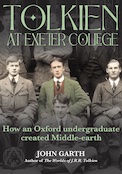 Tolkien at Exeter College: How an Oxford undergraduate created Middle-earth (revised 2022) is the definitive account of Tolkien’s life in the vitally formative years 1911–15, drawing on extensive new research to enlarge the account already given in Tolkien and the Great War. 68 pages including colour cover, with more than 45 images include previously unseen pictures by and of Tolkien.
◼︎‘A must-read for all Tolkien aficionados’ – Michael Ward, author of Planet Narnia.
◼︎ Read more and buy here...
Other writings include a chapter in The Great Tales Never End: Essays in Memory of Christopher Tolkien, recalibrating the history of Tolkien’s earliest Middle-earth writings; a chapter on the Inklings in Catherine McIlwaine’s 2018 Bodleian book J.R.R. Tolkien: Maker of Middle-earth; a life of Tolkien in the Blackwell Companion to J.R.R. Tolkien; major scholarly papers in Routledge’s J.R.R. Tolkien (Critical Assessments of Major Writers); and articles in the Routledge J.R.R. Tolkien Encyclopedia, Exeter College: The First 700 years and Tolkien Studies. I’ve written and commented on Tolkien for the press in Britain and the US. I’ve also spoken live around Britain, the US and Europe; taught for the Oxford University Department for Continuing Education and for the online Signum University; and been interviewed on TV, radio, DVD, in print and online.
Further news
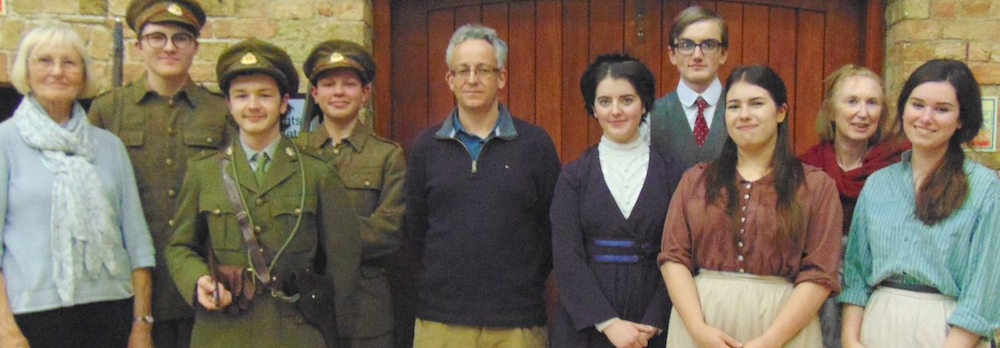 With Rob Gilson's niece Julia Margretts (left) and the cast of ‘I Regret to Inform You’, a play by Mike Levy about Gilson’s battalion and partly based on my research (8 December 2016)
2022
26 November 2022: Was T.W. Earp truly ‘the original twerp’, as his college contemporary Tolkien put it? In a guest post for my blog, Peter Gilliver of the OED unearths more about this fascinating man and the mysterious origins of the word twerp.
23 November 2022: Book of the Day at Guardian Books is Tolkien’s The Fall of Númenor, edited by Brian Sibley and illustrated by Alan Lee – reviewed by me, with comments on Amazon Prime's Rings of Power series.
17 November 2022: Talk, ‘Whispering leaves: How Tolkien’s manuscripts reveal the secrets of his creativity’, at the Haggerty Museum of Art, Marquette University, Milwaukee, to accompany the exhibition J.R.R. Tolkien: Art of the Manuscript.
3 November 2022: I travel around Oxfordshire and Gloucestershire talking with presenter Miles Warde in the BBC Radio 4 Open Country episode ‘Tolkien Land’ – given top billing for the day in the Radio Times as an ‘enjoyable romp through the Engish countryside’.
14 November 2022: With Craig Hanks of the Legendarium Podcast, I discuss my experience of writing about Tolkien.
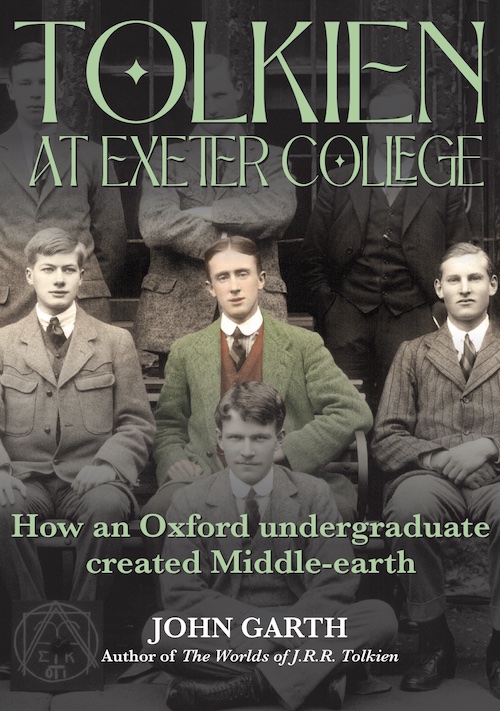
10 November 2022: Revised and improved edition of my book Tolkien at Exeter College published by Exeter College, Oxford.
3 November 2022: Talk, ‘Tolkien and Staffordshire’, to accompany the Magic of Middle-earth exhibition at the Hub at St Mary’s, Lichfield.
28 September 2022: Interviewed about Tolkien for Utah Public Radio.
21 September 2022: In an online talk, ‘The Real World of J.R.R. Tolkien’, hosted by Smithsonian Magazine, I go beyond my article in the October magazine issue (below) to reveal further inspirations for Númenor.
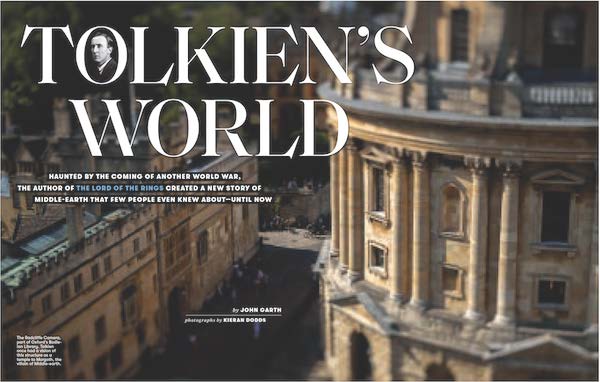
10 September 2022: Major feature for the October issue of Smithsonian Magazine, ‘Tolkien’s World’, revealing vital and unexpected inspirations for Númenor. Published online as ‘How J.R.R. Tolkien came to write the stories of “The Rings of Power”’(and shortlisted for best article in the Tolkien Society Awards 2023).
6 September 2022: In the UK, Frances Lincoln brings out the paperback Worlds of J.R.R. Tolkien.
3 September 2022: Talk, ‘Oxymore in Númenor’, at Oxonmoot (the Tolkien Society’s annual gathering), held at my alma mater, St Anne’s College, Oxford.
September 2022: Slovart publishes Svety J.R.R. Tolkiena, the Slovak edition of The Worlds of J.R.R. Tolkien, translated by Katarína Varsikova; and Data Status publishes Svetovi Dž.R.R. Tolkina, the Serbian edition (reviewed on YouTube).
24 August 2022: Interviewed (along with Tolkien scholar Grace Khuri) by Hephzibah Anderson for BBC Culture about ‘The surprising ancient roots of The Lord of the Rings’.
21 August 2022: Praise for The Worlds of J.R.R. Tolkien, from historian Tom Holland on Twitter: ‘not only a wonderfully rich and learned book, but beautiful as well’.
16 August 2022: The polar bear outfit, the neck-risking party trick, the best recipe for freshly killed dwarf … I write about Tolkien's sense of humour in the Telegraph, ‘A funny thing happened on the way to Middle-earth’.
14–15 August 2022: For the podcast series Tolkien Heads (Homebrewed Christianity) I present a podcast lecture on Tolkien’s life and, separately, have a great hour or so of conversation with Tripp Fuller and Nick Polk (links here; I join just after the 20:35 mark).
12 August 2022: J.S. Barnes cites my chapter among ‘many insightful pieces’ in his TLS review of The Great Tales Never End.
7–12 August 2022: I debut my one-week residential course, , for the Oxford Experience.
31 July to 12 August 2022: I teach consecutive one-week residential courses on Tolkien and CS Lewis in Oxford and (for the first time) An Introduction to Tolkien’s Mythologyfor the Oxford Experience, hosted by Oxford University at Christ Church.
27 July 2022: In a debate on BBC Radio 5 Live’s Colin Murray show, I defeat broadcaster Claire Lim’s motion that the Lord of the Rings movies are better than the books.
26 June 2022: Dr Alaric Hall of Leeds University interviews me about The Worlds of J.R.R. Tolkien at the Bradford Literary Festival.
25 June 2022: I take part in two panel discussions at the Bradford Literary Festival: The Great Tales Never End: Essays in Memory of Christopher Tolkien and ‘Where did Tolkien find his inspiration’.
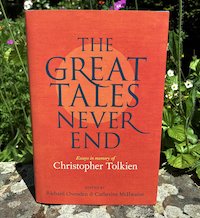 24 June 2022: ‘The Chronology of Creation: How J.R.R. Tolkien misremembered the beginnings of his mythology’ – based on examination of the manuscripts of ‘The Book of Lost Tales’ – appears in The Great Tales Never End: Essays in Memory of Christopher Tolkien, edited by Richard Ovenden and Catherine McIlwaine, from Bodleian Publishing.
22 June 2022: I join Zysk, publishers of the Polish edition of Tolkien and the Great War, in their online launch of the Polish translations of Christopher Tolkien’s magisterial 12-volume History of Middle-earth.
23 May 2022: I answer questions from Michał Sowiński about Tolkien and the First World War in Polish weekly magazine Tygodnik Powszechny.
17 May 2022: The Worlds of J.R.R. Tolkien is named a finalist for the Mythopoeic Scholarship Award in Inklings Studies for the second year running.
6 April 2022: Interview on Tolkien Talk, Brazilian YouTube channel, about Tolkien and the Great War.
23 March and 2 April 2022: Brazilian YouTube channel Tolkien Talk posts two reviews of Tolkien e a Grande Guerra, here and here.
March 2022: Lumen publishes Svjetovi J.R.R. Tolkiena, the Croatian edition of The Worlds of J.R.R. Tolkien.
16 February 2022: Arkady publishes J.R.R. Tolkien i jego światy, the Polish edition of The Worlds of J.R.R. Tolkien.
14 February 2022: I review the Amazon Prime Rings of Power teaser trailer for the Telegraph.
10 January 2022: I discuss Tolkien with students from the University of Maryland during their annual Oxford visit.
2021
16 December 2021: I talk about my work on Tolkien with Tuula Viitaniemi on her show for Finland’s YLE Radio 1.
18 October 2021: In a blog post, ‘The dream of Geoffrey Bache Smith’, I publish a previously unrecognised comic essay by the poet, humorist and TCBSite friend of Tolkien.
October 2021: ‘This new book is proof, if any were needed, that Garth’s research constitutes a fundamental pillar in the reconstruction of Tolkien’s biography and the inspirations for his work.’ Oronzo Cilli reviews The Worlds of J.R.R. Tolkien in the Journal of Inklings Studies, vol.11, issue 2.
14 August 2021: I talk about Tolkien’s British (and overseas) place inspirations, and the New Zealand movie versions, on the BBC Radio 4 Today programme as filming of Amazon Prime's Rings of Power series moves to the UK.
12 August 2021: I discuss the impact of the Lord of the Rings books and movies with Polygon entertainment editor Susana Polo and graphic novelist Molly Ostertag on Connecticut Public Radio’s Colin McEnroe Show.
1 August 2021: Named as finalists in the Mythopoeic Awards: The Worlds of J.R.R. Tolkien and The Great Tales Never End.
16 July 2021: Follies, valleys, colleges and pubs … I give a short video tour of some places that inspired Tolkien and Middle-earth, courtesy of online magazine Euromaxx.
24 June 2021: Editura RAO publishes Tolkien Și Marele Război, the Romanian edition of Tolkien and the Great War.
12 June 2021: New blog post, ‘Testing time for Tolkien, the Inklings and the T.C.B.S.’, reproduces their hilariously impossible Pythonesque quizzes.
30 May 2021: Finding Edith Tolkien in Lothlórien; why the T.C.B.S. are NOT the four Lord of the Rings hobbits; what Susan Cooper and Alan Garner can tell you about secrets of great fantasy … Something for everyone as I talk to Steve Gladwin for An Awfully Big Blog Adventure.
10 May 2021: In a blog post, ‘How I helped craft a Dickensian dystopia’, I describe my work editing Sebastian De Souza’s thrilling and thought-provoking YA science fiction novel Kid: A History of the Future.
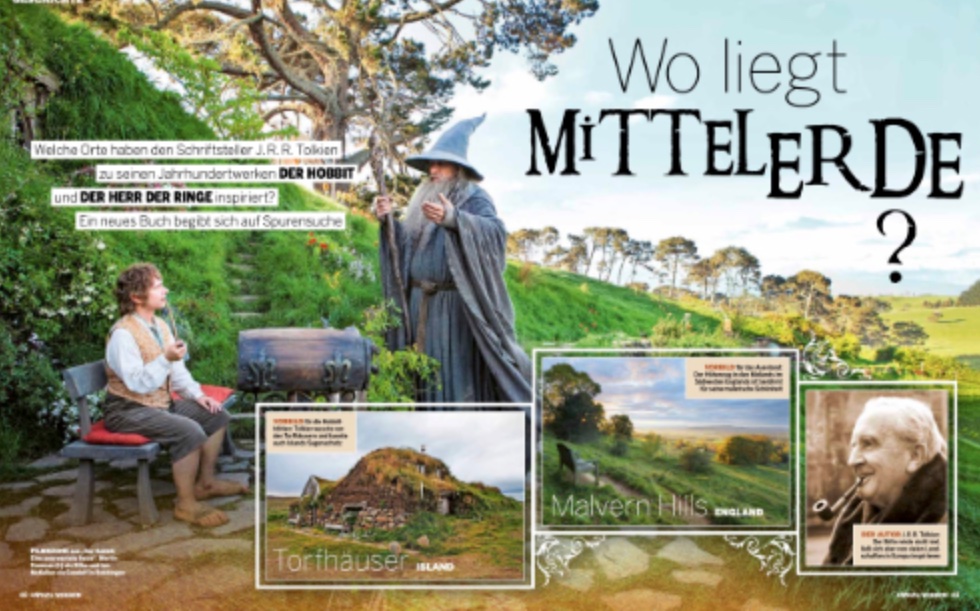 May 2021: German magazine Hörzu Wissen publishes an illustrated feature about my work on places that inspired Tolkien.
7 April 2021: I talk to journalist Luke Ottenhof about how and why Tolkien created the Steward of Gondor, and why it matters now – at gaming and entertainment website Polygon.
April 2021: Q&A by Lukas Heinen for Teilzeithelden (in German).
28 March 2021: The Worlds of J.R.R. Tolkien is shortlisted for the Tolkien Society Awards.
25 March 2021: I read aloud from The Book of Lost Tales – the creation of the Two Trees – for Tolkien Reading Day in a programme hosted by the Tolkien Collector’s Guide.
23 March 2021: David Bratman, Mythopoeic Society veteran and Tolkien Studies editor, hails The Worlds of J.R.R. Tolkien as ‘one of the most valuable books out there for understanding Tolkien’.
26 February 2021: WSOY publishes J.R.R. Tolkienin maailmat: Näin syntyi Keski-Maa, Finnish edition of The Worlds of J.R.R. Tolkien, translated by Jaakko Kankaanpaa; and Corvina publishes the Hungarian edition, Tolkien Világai: Középfölde Helyszíneinek Ihletői, translated Németh Anikó).
16 February 2021: Tolkien Italia publishes an Italian translation of my Marion E. Wade Center interview to mark the publication of I Mondi di J.R.R. Tolkien: I luoghi che hanno inspirato la Terra di Mezzo, Italian edition of The Worlds of J.R.R. Tolkien (translated by Stefano Giorgianni), from Mondadori.
5 February 2021: Světy J.R.R. Tolkiena: Místa, Která Inspirovala Středozem, Czech edition of The Worlds of J.R.R. Tolkien (translated by Vit Penkala), published by Argo.
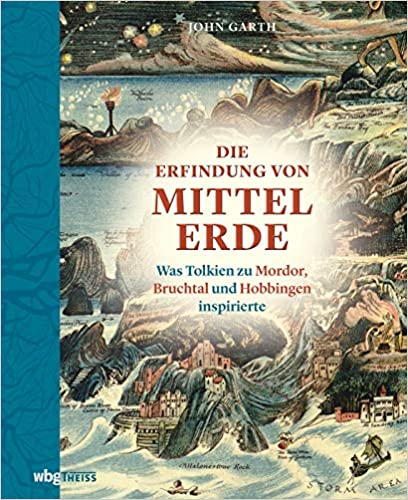 4 February 2021: Die Erfindung von Mittelerde: Was Tolkien zu Mordor, Bruchtal und Hobbingen inspirierte, German edition of The Worlds of J.R.R. Tolkien (translated by Andreas Schiffmann), published by WBG. Comments from the German Tolkien Society here.
3 February 2021: Los Mundos de J.R.R. Tolkien: Los Lugares que Inspiraron al Escritor, Spanish translation of The Worlds of J.R.R Tolkien (translated by Martin Simonson), published by Minotauro.
22 January 2021: Is there a personal homage to Tolkien hidden in Ursula Le Guin’s A Wizard of Earthsea? New blog post uncovers an intriguing possibility.
3 January 2021: I talk to Tolkien Talk (Brazilian YouTube channel) about what lit the spark of Middle-earth; the First World War and the T.C.B.S.; why we must rethink when Tolkien wrote his first prose mythology … and much more. English with Portuguese subtitles.
2020
December 2020: ‘The leading Tolkien critic of the present generation … provides deep access to Tolkien’s craft.’ The Worlds of J.R.R. Tolkien reviewed in the American Library Association’s Choice magazine.
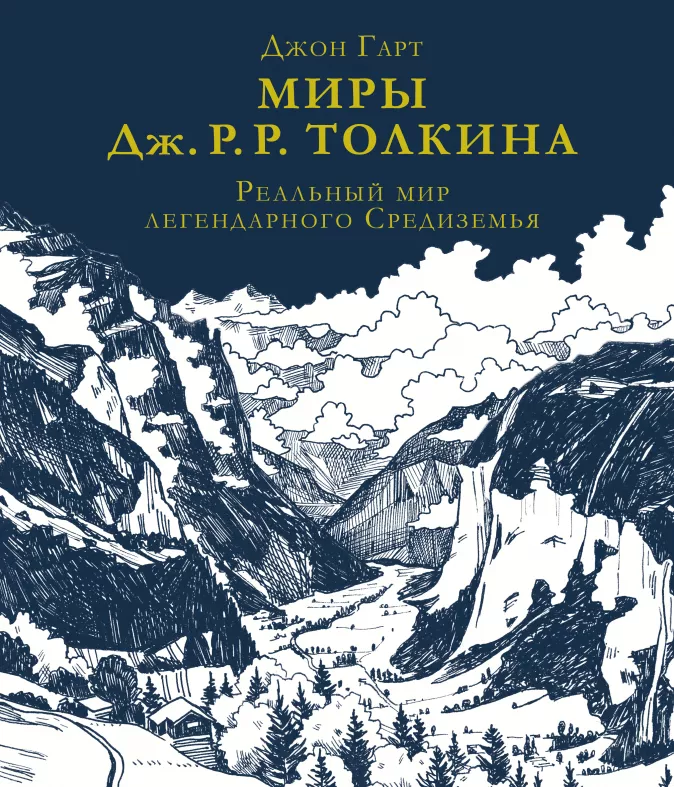 27 November 2020: Миры Дж. Р. Р. Толкина. Реальный мир легендарного Средиземья, the Russian translation of The Worlds of J.R.R. Tolkien, published by AST (translated by Constantin Pirozhkov).
25 November 2020: Les Mondes de Tolkien: Les lieux qui ont inspiré la Terre du Milieu, the French translation of The Worlds of J.R.R Tolkien, published by Hachette Heroes (translated by Xavier Hanart).
21 November 2020: Blog post, ‘He lets us walk the road as JRRT walked it’: Neil Gaiman’s tribute to Christopher Tolkien, published to mark Christopher’s birthday.
20 November 2020: In a Q&A with French Tolkien association Tolkiendil to mark the publication of Les Mondes de Tolkien, I talk about the many kinds of research behind my books; and the many ways that places inspired Tolkien. In English with French translation.
19 October 2020: ‘John Garth's masterful study … Each page illuminates with insights and dazzles with details.’ The Worlds of J.R.R. Tolkien reviewed in Mythlore, Fall/Winter 2020 issue, the journal of the Mythopoeic Society.
 10 October 2020: ‘How Eärendil became the star of hope’, keynote paper for Signum University’s Middlemoot conference online.
October 2020: Interviewed in issue 24 of Aiglos, the journal of the Tolkien Section of the Silesian Fantasy Club (Polish interview by Agnieszka Sylwanowicz, translator of Tolkien and the Great War).
29 September 2020: Interview for the Christian Study Center of Chattanooga, talking with David Beckmann about how Tolkien proves epic could outlive the First World War; why his works are not escapist; and why it’s essential not to skip the poems.
26 September 2020: Spoke with the Mythopoeic Society’s Rivendell discussion group (via Zoom) about The Worlds of J.R.R. Tolkien.
19 September 2020: Spoke about how and why Tolkien invented his own version of the Atlantis myth, in a panel discussion on ‘the Rise of Númenor’ with David Russell Mosley, Sarah Zama and Shawn E. Marchese for TolkienMoot 16, hosted by the Eä Tolkien Society of Spokane (on YouTube).
6 September 2020: Interview for the DragonCon High Fantasy track (on YouTube). Why Tolkien’s early experiences proved so formative in his creativity, why I don’t have eureka moments so much as eu…re…ka moments; what Tolkien might have thought of my work – and more.
16 August 2020: ‘If you love Tolkien’s work and want to know more about where it came from, this book is for you. And if you know anyone else who is, and does, their next birthday or Christmas present is sorted.’ Mortal Engines author Philip Reeves reviews The Worlds of J.R.R. Tolkien.
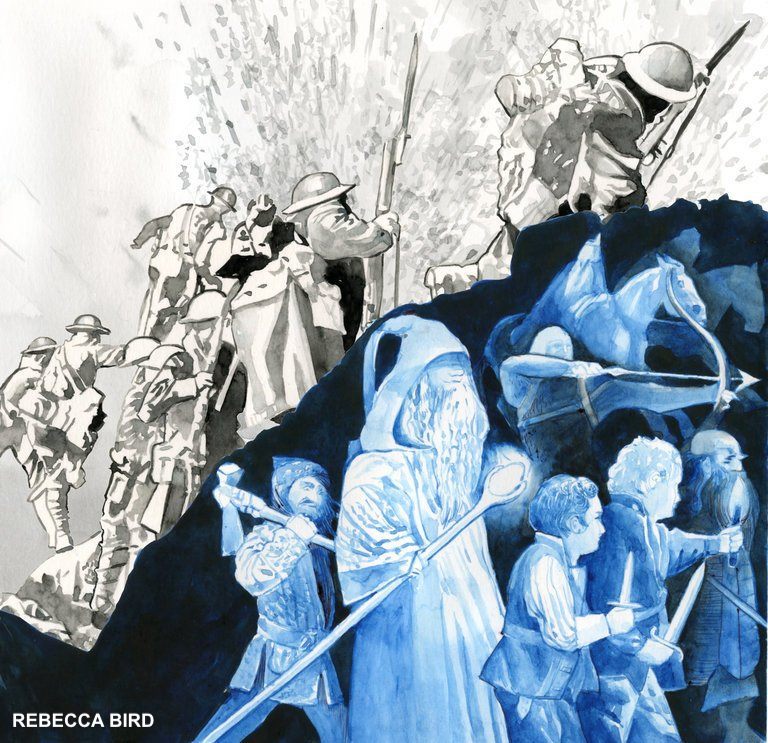 18 August 2020: ‘Tolkien and World War One – Why read The Hobbit and The Lord of the Rings as trench literature?’ Teachers’ webinar for the National World War I Museum in Kansas City, Missouri (available at the museum’s Facebook page).
15 August 2020: ‘This book, as a piece of scholarship, is a really fine addition to the Tolkien canon.’ The Worlds of J.R.R. Tolkien reviewed in the Irish Independent. Also reviewed in The Afterword (9 August) as ‘an absolute snip at the price for such a top quality item’.
August–November 2020: I delivered a 24-lecture online course on The Worlds of J.R.R. Tolkien for Signum University. Watch out for reruns!
24 July 2020: Interviewed by Kris Swank and Gabriel Schenk in a great author chat and Q&A for Signum University – on YouTube. How did I first get the idea for The Worlds of J.R.R. Tolkien? What places did I visit to research it? Where would I go in Tolkien’s life if I had a Tardis? And much more…
23 July 2020: I took part in theOneRing.net’s ‘Dispatches from Middle-earth’ panel discussion at San Diego ComicCon, with coverage at The Beat blog of comic culture. Among other questions tackled: What places did – or didn’t – inspire Tolkien, and why? Where did his opposition to industrialisation come from? What events inspired the Númenor story at the heart of the upcoming Amazon Prime series?
17 July 2020: The Church Times features The Worlds of J.R.R. Tolkien.
13 July 2020: Interviewed by John J. Miller for his National Review Bookmonger podcast about places that inspired Tolkien (in particular, a tower near Oxford); why it helps to understand such inspirations; and what it’s like to help create a book as beautiful as The Worlds of J.R.R. Tolkien.
11 July 2020: In a much-read Twitter thread, I debunk links between Tolkien, the Vyne Ring and a curse inscription at Lydney, Gloucestershire.
11 July 2020: I spoke about Oxfordshire landmarks in The Worlds of J.R.R. Tolkien with Lilley Mitchell of BBC Radio Oxford.
26 June 2020: Welsh connections discussed in The Worlds of J.R.R. Tolkien are highlighted by Nigel Summerley at Pembrokeshire Online.
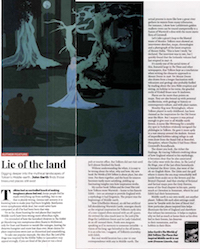 25 June 2020: Author feature for the Big Issue (right), ‘Lie of the land: Digging deeper into the mythical landscapes of Tolkien’s Middle-earth, John Garth finds those places still exist’.
24 June 2020: ‘Looking for Middle-earth? Go to the Middle of England.’ LitHub publishes a generous excerpt from The Worlds of J.R.R. Tolkien.
18 June 2020: Fascinating talk with Stuart Lee of the Oxford University Faculty of English in a launch event for The Worlds of J.R.R. Tolkien on Zoom, hosted by Blackwell’s Bookshop in Oxford.
12 June 2020: ‘This wonderful book is a collectable must … a scholarly work of art.’ Five-star review in the Weekend Sport for The Worlds of J.R.R. Tolkien.
9 June 2020: Publication of my hotly anticipated new book The Worlds of J.R.R. Tolkien: The Places that Inspired Middle-earth, from Frances Lincoln in the UK (order here) and Princeton University Press in the US (order here). Reviewed in the Washington Post the same day by Elizabeth Hand as ‘fascinating, gorgeously illustrated and thought-provoking … masterful’.
6 June 2020: ‘Irrestistible … beautiful … made me realise the impact that Tolkien has had on my life’ – The Worlds of J.R.R. Tolkien reviewed in The Times by Tom Chivers.
6 June 2020: Interviewed on the AbeBooks podcast about the places that inspired Tolkien – from trench dugouts to Europe’s real Mirkwood – as well as what it takes to research and write books like mine.
5 June 2020: On Luke Shelton’s Tolkien Experience Podcast I talk to Sara Brown about my journey from my first, childhood encounter with Middle-earth to the writing of The Worlds of J.R.R. Tolkien.
29 May 2020: Spoke on BBC Radio Berkshire about the surprising and profound impact that Faringdon Folly had on Tolkien.
26 May 2020: ‘Absolutely gorgeous book… absolutely fascinating… All in all, this is the perfect coffee table book… Amazing for both the overly-informed and the ignorant when it comes to Tolkien.’ First substantial reader review of The Worlds of J.R.R. Tolkien, at GoodReads.
23 May 2020: ’The English towers and landmarks that inspired Tolkien’s hobbit sagas’ – interview for the Observer, with arts and media correspondent Vanessa Thorpe, online and in print.
18 May 2020: Interview about The Worlds of J.R.R. Tolkien for the Marion E. Wade Center, with archivist Laura Schmidt. Among other matters, I talk about my pathway to becoming a Tolkien researcher and writer; I give a walk-through of The Worlds of J.R.R. Tolkien; and I reveal how Christopher Tolkien helped with it. Complete interview also translated into Italian.
17 May 2020: Interview with the German Tolkien Society (in English apart from the brief introduction) about The Worlds of J.R.R. Tolkien and other matters, including Tolkien-related movies; how I write; and my work-still-in-progress Tolkien’s Mirror.
10 May 2020: Interview for the Prancing Pony Podcast about The Worlds of J.R.R. Tolkien, with Shawn Marchese and Alan Sisto. I talk about why The Worlds of J.R.R. Tolkien differs from other books about Tolkien’s place-inspirations; how Tolkien took influences from across the globe; why the late Christopher Tolkien can never be replaced – and more.
3 May 2020: Unboxing The Worlds of J.R.R. Tolkien – my first copies arrive!
25 March 2020: As part of a full day of streaming audio hosted by TolkienGuide.com, I gave listeners a first preview of my upcoming book The Worlds of J.R.R. Tolkien.
16 March 2020: I set the questions for The Lord of the Rings: Toughest quiz ever, for the BBC Arts website. Have a look and see how you do!
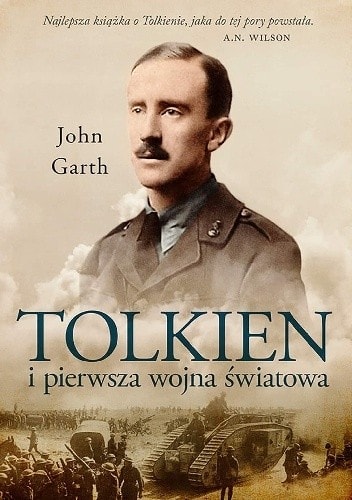 29 February 2020: Tolkien and the Great War is published in Polish by Zysk as Tolkien i Pierwsza Wojna Światowa, translated by Agnieszka Sylwanowicz.
13 February 2020: Live discussion in tribute to Christopher Tolkien with Corey Olsen, Dr Sara Brown, Brad Eden and Carl F Hostetter – now on Signum University's YouTube channel.
12 February 2020: I discuss the life and work of Christopher Tolkien with Thomas Mirus for the Catholic Culture Podcast.
24 January 2020: Talk on Tolkien and the Great War in a colloquium on Tolkien and war at the Bibliothèque Nationale, Paris, accompanying the major exhibition Tolkien: Voyage en Terre du Milieu. Online with French voiceover translation.
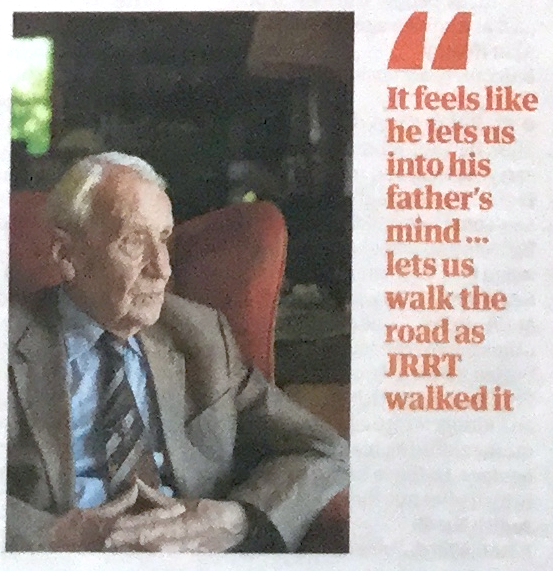 20 January 2020: My obituary of Christopher Tolkien, who died aged 95 on 16 January and will be acutely missed, was published online by the Guardian. It went into print on 25 January (right; the quote is by Neil Gaiman, who told me about his experience of reading Christopher’s History of Middle-earth in comments later published in full at my blog).
10 January 2020: I talked Tolkien with University of Maryland students in Oxford.
2019
11 December 2019: I spoke on Tolkien and the trenches to the Surrey branch of the Western Front Association, in Cobham, Surrey.
7 December 2019: Publishers Weekly announces the Princeton University Press edition of The Worlds of J.R.R. Tolkien: ‘Tolkien scholar Garth, with the cooperation of the author’s estate, introduces fellow Middle-earth fans to the locales, in Britain and throughout the world, that inspired settings in the Lord of the Rings trilogy and other Tolkien titles.’ (In fact publication is now slated for April.)
13 October 2019: I team up with Kurt Indovina for a short film, How WW1 Inspired The Lord of the Rings – part of his True Fiction series for CBS’s Gamespot Universe YouTube channel.
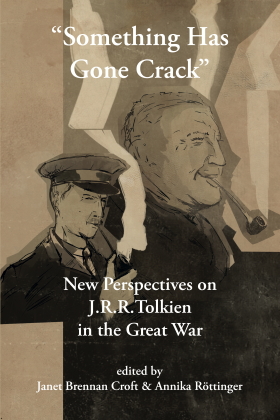 7 October 2019: My paper ‘Revenants and angels: Tolkien, Machen, and Mons’, is published in Something Has Gone Crack: New Perspectives on J.R.R. Tolkien in the Great War (Zürich: Walking Tree, 2019), edited by Janet Brennan Croft and Annika Röttinger. The paper is the first half of my exploration of how aspects of Tolkien’s legendarium relate to Arthur Machen’s 1914 story ‘The Bowmen’ and the modern legend of the Angels of Mons. The second half will follow in due course …
 4 October 2019: Want to know how accurate the Fox Searchlight Tolkien biopic is? I give the low-down to Dan LeFebvre – as well as a wealth of biographical insight into Tolkien – for the excellent movie podcast Based on a True Story.
15 September 2019: I chat with the Prancing Pony podcasters at the Tolkien 2019 conference in Birmingham (from 9min 45 to 20min).
28 August 2019: I spoke on Tolkien’s war experiences with the Lancashire Fusiliers, as part of the ‘Summer of Tolkien’ at the Fusilier Museum, Bury, Lancashire. I also provided the interpretative panels for the museum’s centrepiece exhibition on Tolkien and the Somme.
12–17 August 2019: One-week course on Tolkien and CS Lewis in Oxford for the Oxford Experience residential summer programme, hosted by Oxford University at Christ Church.
8 August 2019: I gave a foretaste of Tolkien’s Worlds in a talk, The Two Towers of Birmingham and Other Follies, at Tolkien 2019, the Tolkien Society’s biggest-ever conference, held in Birmingham.
3 August 2019: Shorthand Signalling: A new source for Tolkien’s Tengwar? — presented remotely to Omentielva Toltea, the eighth international conference on Tolkien's invented languages, Reykjavik, Iceland.
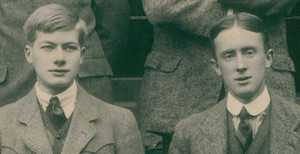 29 July 2019: A new blog post, Tolkien’s last friend in Oxford when the world went to war, reveals more about one of the central figures in the author’s life in the year he first created Middle-earth.
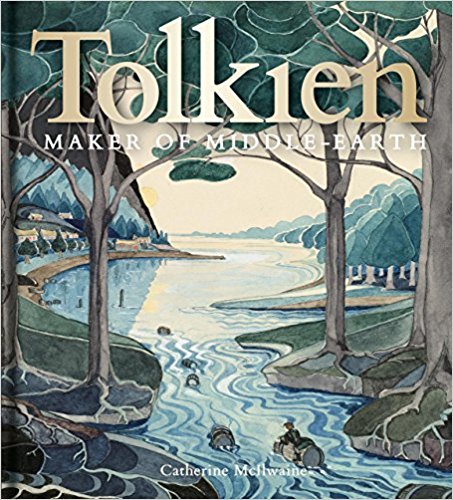 25 July 2019: Catherine McIlwaine’s sumptuously splendid Bodleian exhibition book Tolkien: Maker of Middle-earth, including my chapter on Tolkien and the Inklings, is nominated for a World Fantasy Award.
7 April 2019: It is named Best Book in the Tolkien Society Awards 2019.
2 April 2019: It is nominated for a Hugo award.
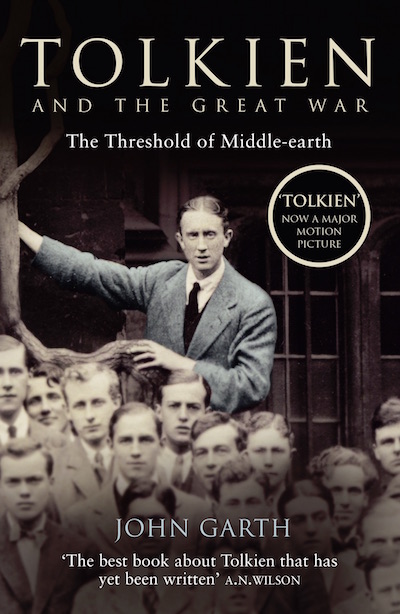 April 2019: New cover for the HarperCollins paperback / ebook of Tolkien and the Great War to coincide with the release of the Fox Searchlight Tolkien biopic.
27 April 2019: Feature on Tolkien’s early life and First World War experiences for the Mail On Sunday magazine.
Talk on Tolkien at the Great War Forum Conference, Tally Ho Conference Centre, Birmingham.
23–4 April 2019: I speak to the Guardian and the Telegraph about the Tolkien Estate and the Fox Searchlight biopic Tolkien.
16 March 2019: I gave the keynote speech at the Morgan Library’s Tolkien Symposium in New York, accompanying the Tolkien: Maker of Middle-earth exhibition previously at Oxford’s Bodleian Library.
14 March 2019: I give my insights into the upcoming Amazon Lord of the Rings series, in the Express.
 25 February 2019: ‘Ilu’s Music: The Creation of Tolkien's Creation Myth’, my investigation of the original sources and inspirations for the opening story in The Silmarillion, is published in a fabulous new collection on Tolkien and world-building, Sub-creating Arda, edited by Dimitra Fimi and Thomas Honegger and published by Walking Tree.
21 January 2019: Talk to University of Maryland students in Oxford.
22 January 2019: Talk on Tolkien’s creation myth, Oxford C.S. Lewis Society.
23 January 2019: Taruithorn, the Oxford Tolkien Society, gets to hear my talk on Tolkien’s Atlantis myth of Númenor.
2018
December 2018: ‘The workers return’, article on what lay in store for homecoming soldiers after the Armistice in 1918, for Unite the Union’s uniteWorks winter 2018/2019 issue.
16 November 2018: Talk at the British Library event Tolkien’s World, together with artist Alan Lee and Oxford English lecturer Mark Atherton, in celebration of Middle-earth’s Anglo-Saxon connections.
2 November 2018: ‘That was ridiculously interesting!’ One of the reactions to my talk Tolkien: From the Trenches to Middle-earth at Windsor Guildhall.
22 September 2018: Keynote talk at the Tolkien Society’s annual Oxonmoot convention, on Tolkien’s Númenor and his science-fiction ‘wager’ with CS Lewis.
8 September 2018: I sleuth out the origins and meaning of Tolkien's creation myth and explain its links with The Fall of Gondolin. My talk at the Bodleian's Weston Library is online here until 28 October. (You can also watch Dr Stuart Lee talk about the 1968 BBC programme Tolkien in Oxford.)
 25 August 2018: My review of Tolkien’s The Fall of Gondolin appears in The Times. (Register here for two free articles per week.)
18 August 2018: Opening talk for Tolkien Day at Blackwell’s bookshop, Oxford, on how Tolkien first landed in Middle-earth in 1914.
5–11 August 2018: One-week course on Tolkien and CS Lewis in Oxford for the Oxford Experience.
22 June 2018: Gave a keynote paper, ‘Ilu’s Music: The creation of Tolkien’s Creation myth’ at Signum University’s Mythmoot V, at the National Conference Center in Leesburg, Virginia, USA. I was also interviewed live on stage for the Prancing Pony podcast, I gave the speech of congratulations to Signum’s new MA graduates, and I co-judged a costume contest!
 5 June 2018: Publication of ‘Uncle Curro’: J.R.R. Tolkien’s Spanish Connection, by José Manuel Ferrández-Bru. I contributed the preface for this biography of Tolkien’s guardian and ‘second father’, Francis Morgan.
2 June 2019: ‘A once-in-a-generation event’ – I review the Bodleian Library exhibition Tolkien: Maker of Middle-Earth for the Sunday Telegraph.
May 2018: My chapter on Tolkien and the Inklings appears in the Catherine McIlwaine’s Tolkien: Maker of Middle-earth, the book accompanying the major exhibition at the Bodleian Library in Oxford.
28 April 2018: Spoke at LondonMoot, a one-day literary conference on fantasy, science-fiction and fairy-tales hosted by Signum University, on Tolkien’s creation myth.
10 April 2018: I speak to the Guardian and Times as the publication of Tolkien’s The Fall of Gondolin is announced.
28 February 2018: Long-form feature on Oxford, heritage and conflict explains why Oxford archaeologists dream of seeing the Palmyra Arch rebuilt by Syrians. Part of a suite of articles for highlighting the university’s research work, also including:
— Oxford and Britain’s heritage sector.
— Unlocking the world’s oldest mystery script.
— Please touch the art.
— Digging into Oxford’s past.
— Why I used sheep entrails to predict the Trump era.
4 February 2018: I'm interviewed in the Sunday Telegraph as part of a property article, ‘Mapping Tolkien's real Middle-earth (better known as the West Midlands)’. Free login required.
2017
23 November 2017: I talk to Taruithorn, the Oxford Tolkien Society, about Tolkien’s Music of the Ainur.
15 November 2017: Interview with the Prancing Pony Podcast about Tolkien and the Great War.
5 November 2017: A poem, In the Abyss.
4 November 2017: ‘A discovery … a magnificent and truly original analysis’ – great review, in Catalan, of Tolkien y la Gran Guerra. Translation here…
30 October 2017: I talk about Tolkien and my research, on the Spanish Tolkien Society’s Regreso a Hobbiton podcast. Interview (in English) starts 24:37 (with slight sound problems for the first minute) and ends 63:22.
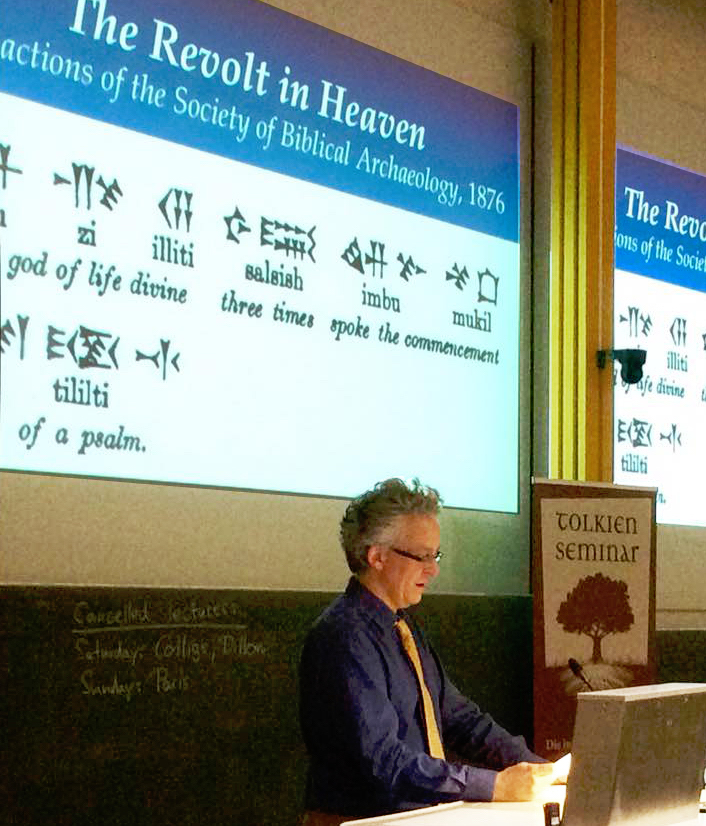 28 October 2017: I presented a new research paper, ‘Ilu’s Music: The creation of Tolkien’s Creation myth’, as keynote speaker (right) at the German Tolkien Society’s Tolkien Seminar on Literary Worldbuilding, at Augsburg University.
6 October 2017: A quintet of articles on Oxford University’s work on the mosquito and its impact on world health:
— Oxford and the mosquito: If world health chiefs don’t listen we’ll see a new pandemic, warns top malaria expert.
— Acoustic mosquito detector to aid campaign against tropical diseases.
— How prehistoric humans spread malaria across the globe.
—How Oxford is broadening the battlefront against tropical disease.
—Other mosquito-borne diseases.
 13–14 October 2017: I gave a paper, ‘The Likeness of Lúthien: How Britain and Edith Tolkien are reflected in Middle-earth’, to the Spanish Tolkien Society’s annual conference in Tortosa.
— My photos of the guests in fabulous costume for the society’s annual feast at Miravet Castle are here.
— At the closing ceremony I read from the end of The Lord of the Rings.
21 August 2017: Guest blog post by Peter Gilliver of the Oxford English Dictionary – Tolkien the opera composer.
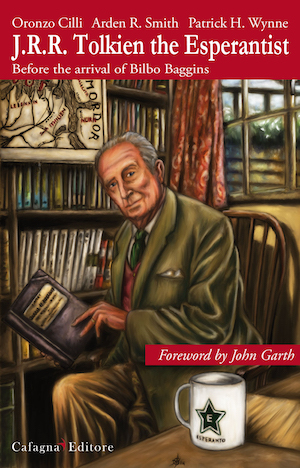 6–12 August 2017: One-week course on Tolkien and CS Lewis in Oxford for the Oxford Experience, run by Oxford University.
July 2017: Publication of Tolkien the Esperantist (Cafagna Editore, Italy), with a foreword by me and essays by Tolkien, Oronzo Cilli, Arden R Smith and Patrick H Wynne.
16 June 2017: Signed copies of Tolkien and the Great War help to secure funding for Lest We Forget, a mass-digitisation initiative of publicly-held material from the First World War.
11 June 2017: I’m interviewed on the Prancing Pony Podcast, a free bi-weekly programme by Tolkien enthusiasts Alan Sisto and Shawn E Marchese (60 minutes). Programme details here.
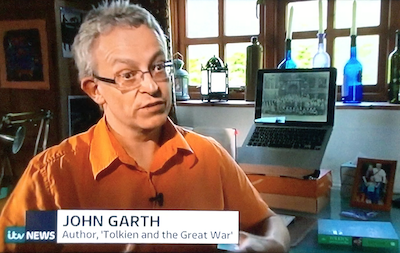 31 May to 5 June 2017: Multiple interviews about Tolkien’s Beren and Lúthien.
—On television, ITV’s News at Ten (left) on 1 June 2017; Australia’s ABC News Weekend Breakfast on 4 June.
—On radio, BBC Radio Oxford (segment begins at 1 hour 47 minutes) on 31 May 2017; Newstalk National Radio Ireland (last item on the show) on 1 June; BBC Radio 5 Live on 2 June, and Canadian CBC’s As It Happens (at the 21:20 mark) on 5 June.
—Online, quotes from my Radio Oxford interview were used in 1 June BBC News article and reused by dozens of worldwide media outlets online.
27 May 2017: ‘Here be dragons’, Telegraph Review section and online as ‘The man who brings Tolkien to life’ – I interview Oscar-winning artist Alan Lee about his work on Tolkien’s Beren and Lúthien, the Peter Jackson movies, and other highlights of his career.
26 May 2017: Love, war and Tolkien’s lost tales – I review Beren and Lúthien in the New Statesman.
25 May 2017: Gardening the corner of a foreign field – As the Commonwealth War Graves Commission marks its centenary, I recall a 2014 visit to Flanders and northern France when I spoke to the gardeners who keep the cemeteries pristine.
23 May 2017: Catch a virus, kill a cancer: The new world of virotherapy, Oxford Today (also in the Trinity 2017 print issue, p20).
25 April 2017: I’m the winner of the Tolkien Society’s Outstanding Contribution Award. The various annual awards ‘recognise excellence in the fields of Tolkien scholarship and fandom’.
7 April 2017: Routledge’s J.R.R. Tolkien (Critical Assessments of Major Writers), a four-volume anthology for libraries, includes my ‘Postscript: One Who Dreams Alone’ from Tolkien and the Great War and my scholarly paper ‘As Under a Green Sea: Visions of War in the Dead Marshes’.
April 2017: ‘The good sport: Lightweight rowing’, Oxford Today print issue, p54.
April 2017: The making of the Oxford English Dictionary, interview with Peter Gilliver, author of the landmark history, published online in 24 October 2016, appears in Oxford Today print issue, p50.
31 March 2017: New blog post, When Tolkien reinvented Atlantis and Lewis went to Mars, adds a further discovery to my December article for the Telegraph – this time, especially relevant to Lewis readers.
25–26 March 2017: Talks in Oslo at ArtheCon, annual convention of Arthedain, the Tolkien Society of Norway, about the revenant dead of The Lord of the Rings and the invention of Númenor.
24 February 2017: Visions of paradise reveal unknown vistas of history, Oxford Today (also in the Trinity 2017 print issue, p19).
8 February 2017: The drone inspired by a dragonfly, Oxford Today (also in the Trinity 2017 print issue, p17).
17 January 2017: Atlantis and Mars: New Light on Tolkien, Lewis, and their Science-Fiction Pact – talk to the Oxford CS Lewis Society.
January–June 2017: Digital editor of Oxford Today: The University Magazine.
2016
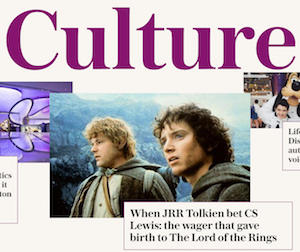 8 December 2016: Nearly 75,000 people read my Telegraph online feature on the origin of Tolkien’s story of Númenor in a historic wager with CS Lewis (left, free registration required). Also a double-page Sunday Telegraph spread on 11 December.
8 December 2016: In Ely, Cambridgeshire, I read from the letters of Tolkien's friend Rob Gilson in a commemoration of his battalion. The letters and my research also featured in a play, I Regret to Inform You, by Mike Levy, conveying the experience of soldiers and their loved ones. The event was followed by a commemorative publication about the 11th Suffolk Battalion, Sons of Cambridgeshire, by Gordon Phillips and Nicky Stockman.
16 November 2016: My review of Tolkien’s The Lay of Aotrou and Itroun is published at Telegraph online (free registration required), having appeared in the newspaper’s Saturday Review on 12 November.
11 November 2016: I revealed my latest discoveries about ‘The Great Wave: Tolkien’s Atlantis myth, the 1930s crisis of civilisation, and the bridge to The Lord of the Rings’ as part of a great line-up at Tolkien Day, hosted by Liverpool Hope University.
24 October 2016: BBC4 screened ‘Fantasy’, an episode of Sleuths, Spies and Sorcerers: Andrew Marr’s Paperback Heroes on which I acted as consultant.
19 October 2016: New blog post on Tolkien’s Beren and Lúthien, a centenary publication.
1 October 2016: Teaching Tolkien in Nevada: Former OT digital editor John Garth on his move to Las Vegas – article for Oxford Today about my year as Fellow of the Black Mountain Institute.
3 September 2016: Double-length talk, ‘Revenants: How the ghosts of World War One returned to haunt The Lord of the Rings’, at the annual conference of Seryn Ennor, the Swiss Tolkien Society, hosted by the Greisinger Museum in Jenins.
25 July 2016: Talk on Tolkien, writing and publication, to the Henderson Writers’ Group, Las Vegas.
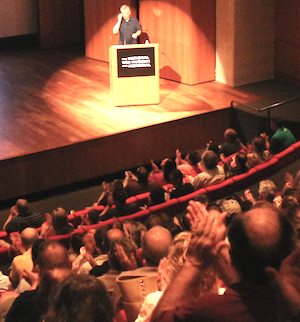 16 July: Great turnout for my talk on Tolkien’s ghosts, right, followed by book signing, at the National World War 1 museum, Kansas City, Missouri (picture courtesy of the museum).
11 July to 12 August 2016: 25-session graduate/undergraduate course on Tolkien and Heroic Epic, University of Nevada in Las Vegas.
3 July 2016: Repeat BBC4 showing for War of Words: Soldier-Poets of the Somme to mark the centenary of the battle.
2 June 2016: In consultation with me, the German Tolkien Society launches a series of online posts on Tolkien in the Great War (in German as Tolkien im Ersten Weltkrieg) charting key dates in his Somme experience.
13 May 2016: French website Tolkiendil showcases my work, including links, reviews, and the film Tolkien’s Great War with French subtitles.
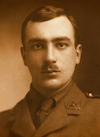 11 May 2016: New blog post discussing a superb documentary on which I help tell the story of Tolkien’s TCBS friend Robert Quilter Gilson (right) up to his death in the Battle of the Somme. Commissioned by King Edward’s School in Birmingham, it is closely based on my work with his letters.
15 April 2016: In the New Statesman I review A Secret Vice: Tolkien on Invented Languages, edited by Dimitra Fimi and Andrew Higgins.
19 April 2016: My blog post ‘Tolkien’s “immortal four” meet for the last time’ is named Best Article in the Tolkien Society Awards 2016 – the second time in three years that one of my pieces has won this award. You can read the 2014 winner here. Spanish versions of the two pieces are here and here; a Portuguese version of the more recent piece is here.
 April 2016: I review Grevel Lindop’s biography Charles Williams: The Third Inkling for Oxford Today.
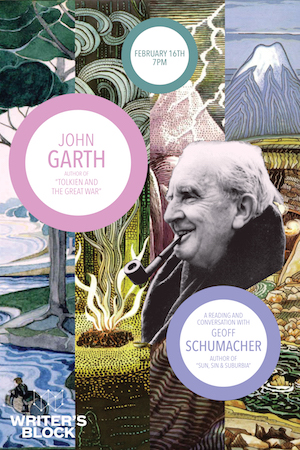
16 February 2016: Tolkien talk and discussion, at the fabulous Writer’s Block bookshop, Fremont Street, Las Vegas.
21 January to 12 May 2016: Course for undergraduates on Tolkien as British Literature, in 17 double-length sessions at the University of Nevada in Las Vegas.
2015
31 December 2015: ‘A must-have for anyone seriously interested in Tolkien’s life and work is John Garth’s Tolkien at Exeter College. Garth, who wrote the ground-breaking study Tolkien and the Great War, has extended his research to Tolkien’s time as an undergraduate, with new discoveries and insights (and photographs). This new, short book is an excellent complement to the longer study, and deepens our understanding of the origins of Tolkien’s lifelong work on The Silmarillion.’ —Holly Ordway, ‘The Best Books I Read in 2015’, Catholic World Report.
18 December 2015: Publication of Tolkien l’esperantista (‘Tolkien the Esperantist’, Cafagna Editore, Italy), with essays by Tolkien, Oronzo Cilli, Arden R Smith and Patrick H Wynne, and a preface by me.
December 2015: Longform interview on Tolkien in German-language journal of fantastic literature Quarber Merkur.
 17 November: I talk about my research as Fellow in Humanistic Studies at the Beverly Rogers, Carol C Harter Black Mountain Institute, as part of International Education Week at the University of Nevada in Las Vegas.
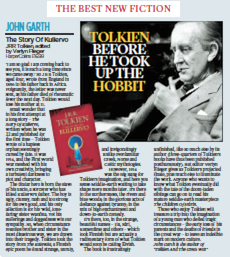
6 September 2015: My review of Tolkien’s Story of Kullervo (right) appears in the Mail on Sunday.
27 August 2015: I speak to BBC News about The Story of Kullervo, and Tolkien’s fascination with Finnish language and lore.
August–November 2015: I teach a 24-session online course for the Mythgard Institute, on Tolkien’s Wars and Middle-earth, heralded by a Q&A.
 17 August 2015: I take up my position as Fellow in Humanistic Studies for 2015-16 at the Beverly Rogers, Carol C Harter Black Mountain Institute, the University of Nevada in Las Vegas.
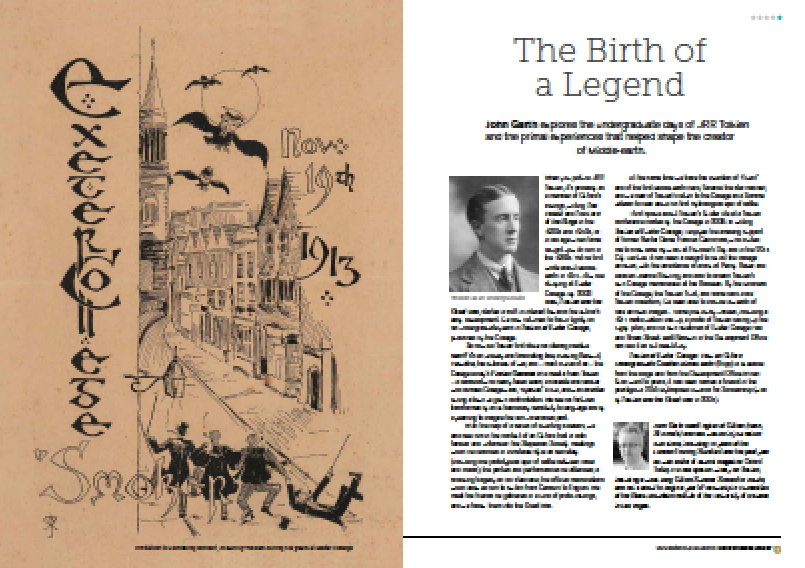
13 August 2015: ‘The birth of a legend’, article on Tolkien at Exeter College for the college’s Exon magazine.
August 2015: Widely quoted in media ahead of publication of Tolkien’s The Story of Kullervo (ed. Verlyn Flieger).
3 July 2015: ‘“Quickened to full life by war”: A fresh look at why Tolkien fell for Faërie’ — talk at the Tolkien Society Seminar 2015, Leeds.
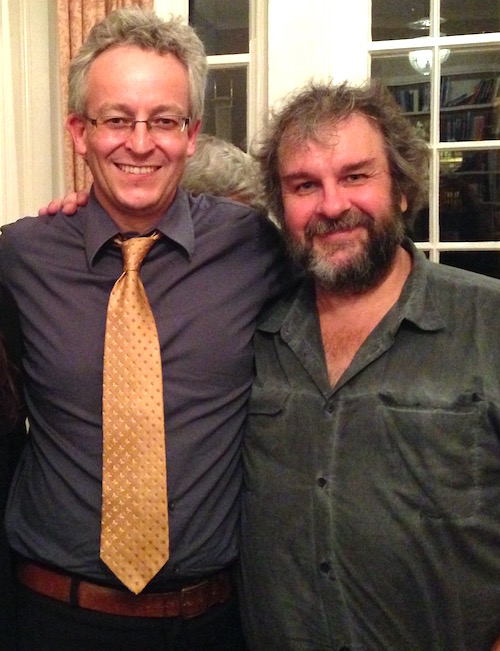 25 June: I joined Sir Peter Jackson (right) and his partner Fran on their visit to Exeter College, Oxford, and showed them highlights of the Tolkien-related archives there.
7 June 2015: I talk to the Sunday Times about the imminent book publication of Tolkien’s Story of Kullervo, predecessor to the Middle-earth tales. Also in India’s Daily News and Analysis.
30 May 2015: Tolkien at Exeter College is named a finalist for the Mythopoeic Award for Scholarship (won by Tolkien and the Great War in 2004).
April 2015: ‘John Garth’s latest chronicle on the early life of JRR Tolkien is a very good thing indeed. Like its predecessor ... it belongs on the bookshelf of every Tolkien scholar.’ —Tolkien at Exeter College reviewed by Mike Foster in Mythlore.
9 April 2015: Tolkien talk for the Brigham Young University London Centre, LDS Church, London.
5 April 2015: Science Fiction and Fantasy Writers in the Great War, a web resource by Edward James and partly inspired by Tolkien and the Great War, wins the Best Non-Fiction prize in the 2014 British Science-Fiction Association awards.
31 March 2015: Review of Tolkien at Exeter College at Elbakin.net: ‘riche en surprises et en découvertes … une lecture à conseiller à tous les fans de Tolkien qui s’intéressent tout particulièrement à la genèse de la Terre du Milieu’.
27 March 2015: Podcast, ‘100 years on, how Tolkien came to the brink of Middle-earth’ — a recording of my paper at last November’s Merton College Tolkien in Oxford symposium.
— ‘How Tolkien discovered fairy-tale through Beowulf and war’, previously presented at October’s Oxford English roundtable, published at the launch of the Sci-Fi and Fantasy Network.
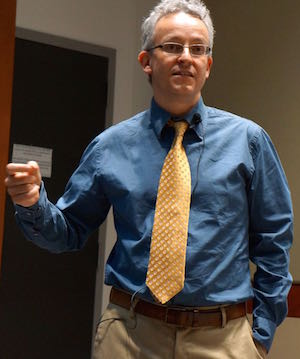 25 March 2015: I talk on Tolkien and the Great War at Sam Houston State University, Texas, left, for the Tenth Annual Joan Coffey Symposium.
25 March 2015: For Tolkien Reading Day, on the theme of friendship, the Tolkien Society filmed me reading a deeply moving letter to Tolkien from the trenches, 1916.
20 March 2015: I’m honoured to be named Fellow in Humanistic Studies for 2015-16 at the Black Mountain Institute, the University of Nevada in Las Vegas.
16 March 2015: ‘Root and branch’, interview with the extraordinary gardener of one of Oxford’s most extraordinary college gardens. Previously appeared, slightly cut, in Oxford Today’s Michaelmas 2014 issue, 16 October.
3 March 2015: Talk on Tolkien and the First World War at the Hudson Library and Historical Society, Ohio.
27 February 2015: Tolkien on the brink of Middle-earth 100 years ago: I talk at Regent’s Park College, Oxford.
21 February 2015: My work on Tolkien is the focus of a blog post by Dr Anna Smol of Mount St Vincent University, Nova Scotia. With videos: my Oxonmoot 2014 talk and Tolkien’s Great War.
20 February 2015: Rites of passage: student experiences abroad – singing at the Sorbonne, particle physics at CERN . . . and building loos in Cambodia. Oxford Today. Also at Oxford University’s Annual Review.
18 January 2015: Dragon scale: Why it’s impossible to size up Tolkien’s Middle-earth – blog post. Also in Portuguese.
2014
27 December 2014: A big feature by Javier Noriega in ABC, Spain's third-largest newspaper, based on my book. ‘Asistido por su notable intuición y erudición, nos acerca a un Tolkien en sus múltiples facetas, de oficial, escritor, estudioso y ser humano.’
22 December 2014: I interview Tim Severin about his famous ‘Brendan Voyage’ across the Atlantic in a replica sixth-century leather boat, and about his first adventure: retracing Marco Polo’s route to China – on a motorbike with Boris Johnson’s dad.
18 December 2014: Interviewed about ‘the trenches where Middle-earth was conceived’ in the Spanish Catholic paper Alfa y Omega.
14 December 2014: ‘Der wahre Krieg des Herrn der Ringe’ (‘The real war of The Lord of the Rings’), in Die Welt, an abridged text of my 2 November talk to a capacity crowd at the Militär Historisches Museum in Dresden.
13 December 2014: Comments in the Boston Globe on the final Hobbit movie, here and here.
9 December 2014: ‘Tolkien’s death of Smaug: American inspiration revealed’, in the Guardian and (20 December) South China Morning Post.
8 December 2014: Interviewed for the Daily Mirror centre-spread feature, ‘How First World War inspired Middle-earth epics’. Read online here...
— Comments in the Oxford Mail at the opening of the Ashmolean Museum exhibition William Blake: Apprentice and Master.
7 December 2014: Interviewed for the lead Sunday Times News Review feature, ‘The hobbit's guide to our warring world’ (subscription needed). Also at The Australian.
4 December 2014: I talk about Tolkien’s life and work in a France 5 TV special, JRR Tolkien: Le Seigneur des Ecrivains, also featuring George R.R. Martin and French Tolkien scholars Vincent Ferré, Leo Carruthers, Isabelle Pantin and others.
November 2014: I appear in a splendid half-hour film, Tolkien’s Great War, made for the First World War centenary exhibition at King Edward’s School, Birmingham – the best video accompaniment to Tolkien and the Great War you’ll find right now. Also available at Tolkiendil with French subtitles.
28 November 2014: Tolkien and Oxford, article in German for TV magazine Arte.
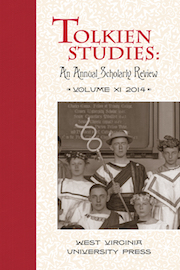 27 November 2014: In Tolkien Studies 11, ‘The road from adaptation to invention’: How Tolkien came to the brink of Middle-earth in 1914, the in-depth exploration I only touch on in my Guardian piece. In the same issue I Tolkien’s first Elvish lexicon and major later work too (as published in Parma Eldalamberon 12 and 21). The book can be ordered here.
26 November 2014: Tolkien’s Dead Marshes, at Great War and Modern Imagination Conference, Beverley, East Yorks.
18 November 2014: I spoke on Tolkien’s 1914 creative breakthrough at Tolkien in Oxford: A Symposium, Merton College. The talk can now be heard as a podcast.
17 November 2014: Video interview for French website Tolkiendil (in English).
16 November 2014: ‘Es fällt schwer, den Enthusiasmus des Autors für sein Thema nicht zu teilen. Garth beschreibt Tolkiens Leben so facettenreich und liebevoll, dass es eine Freude ist.’ Review of Tolkien und der Erste Weltkrieg, n-tv.de.
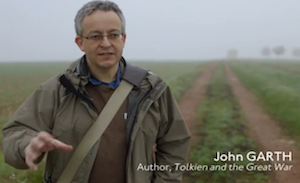 15 November: I talk on location about Tolkien in BBC2 documentary War of Words: Soldier-Poets of the Somme, left.
15 November 2014: Live Q&A, Compiègne’s Bibliothèque Saint-Corneille, as part of exhibition, Tolkien et la Grande Guerre, le fondement d'une mythe.
11 November 2014: Talk to the Oxford CS Lewis Society on Tolkien’s 1914 creative breakthrough.
9 November 2014: I read from the letters of Robert Quilter Gilson, TCBS, as part of the centenary Remembrance Sunday events at his alma mater, Trinity College, Cambridge.
5 November 2014: ‘Fire, Fawkes and fisticuffs’, Oxford Today.
22 October 2014: I talked with four Oxford Anglo-Saxon professors in ‘Tolkien’s Beowulf: A Roundtable’, a Medieval English Research Seminar with the Faculty of English at Oxford University. The text is now online at the Sci-Fi and Fantasy Network.
17 October 2014: China’s new long march: 80 years after Mao set out, what lies ahead for a nation he would barely recognise?
10 October 2014: Talk on Tolkien to Western Front Association (Herts and Beds branch), Harpenden.
6 October 2014: ‘Recovering Hydra’, Oxford Today – how my Tolkien research led me to discover historic lost issues of a Great War magazine edited by Wilfred Owen. A fuller account appeared in September in the Wilfred Owen Association Journal, 2014 issue 2, on 17 June on my blog, and on 12 June in Oxfordshire Limited Edition (Oxford Times).
24 September 2014: In a triple whammy for the centenary of Middle-earth, I give three different considerations of the 1914 creative breakthrough that started it all — in the Guardian, in a video of my Oxonmoot talk, and at my blog (also in Italian). At Oxonmoot I was interviewed on video on this topic and others by Jay Johnstone.
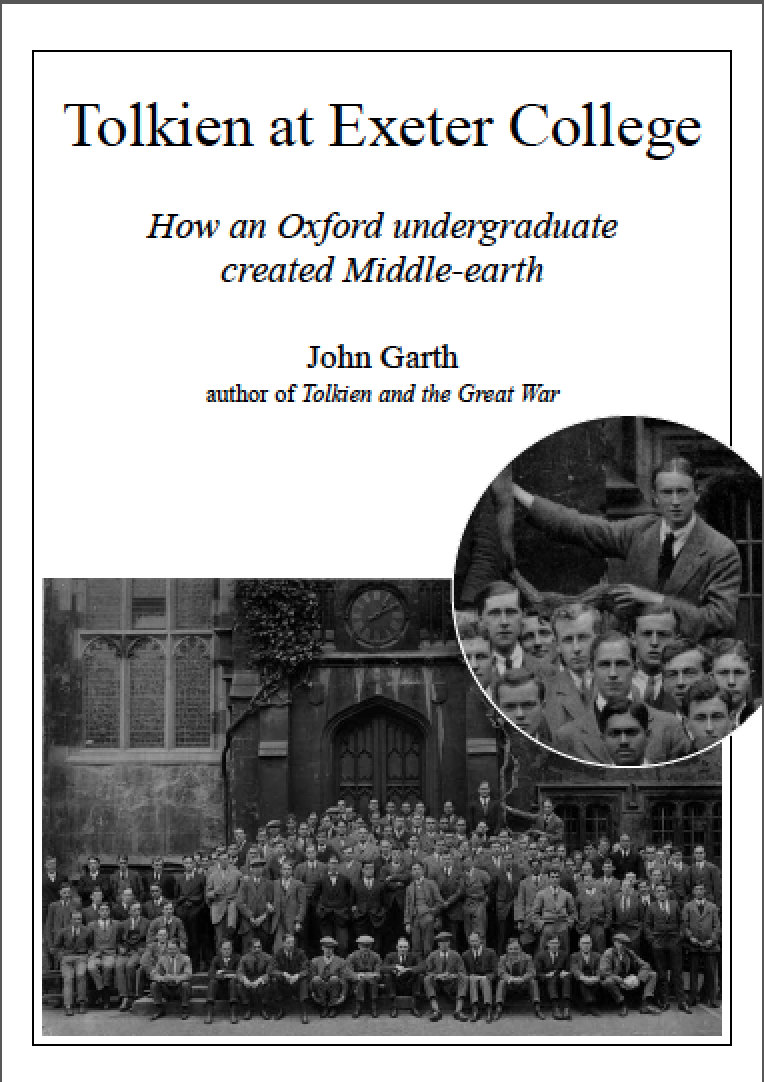 12 September 2014: My 64-page illustrated book Tolkien at Exeter College: How an Oxford undergraduate created Middle-earth is published with the college.
— I also talk at Oxonmoot, the Tolkien Society annual gathering, on ‘Tolkien on the brink of Middle-earth, 1914’. Video highlights here...
August 2014: I am now digital editor of Oxford Today: The University Magazine.
27 August 2014: Guest appearance on Son Rise Morning Show, EWTN Radio.
23 August 2014: Tolkien y la Gran Guerra is profiled in major Spanish daily paper El Mundo.
9 August 2014: I celebrate Tove Jansson, creator of the Moomins, on her centenary – at the Daily Beast.
4–8 August 2014: Articles on the First World War for UniteLive, focusing on workers who went to war, the ‘Red Clydeside’ agitation over living and working conditions, women, war and the work revolution, agricultural workers, and the changing balance of power.
2–8 August 2014: I teach a week’s course on Tolkien and Oxford with Dr Maria Artamonova for the Oxford University Summer School for Adults, exploring Tolkien the war writer and academic.
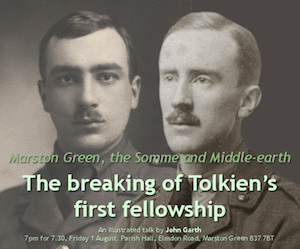 1 August 2014: Illustrated biographical talk, The Breaking of Tolkien's First Fellowship, opening a weekend of Great War commemorations in Marston Green (home of the Gilson family).
29 July 2014: ‘Why World War One Is at the heart of Lord of the Rings’, Daily Beast – for The Fellowship of the Ring’s 60th anniversary. Also available in Portuguese.
26 July 2014: I talk to a journalist about how the First World War turned Tolkien into a writer in this article in the major Brazilian newspaper Estadão. For my full comments, in English, see here.
23 July 2014: Talk on Tolkien to the University of Alabama’s Oxford summer school, Worcester College.
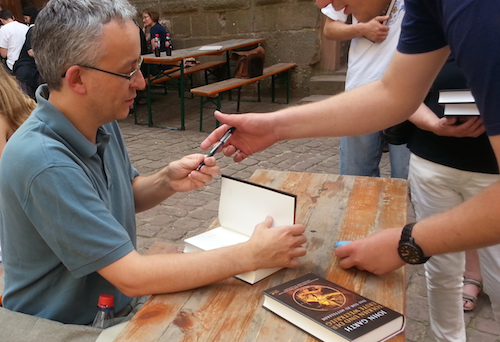 Signing copies of Tolkien und der Erste Weltkrieg after my talk as guest of honour at Tolkien Thing 2014, Burg Breuberg
18–20 July 2014: Guest of honour at Tolkien Thing, the annual gathering of the German Tolkien Society, at Castle Breuberg in Hesse.
14 July 2014: Why your grandchildren may work as hard as you – or even harder. Oxford Today.
11 July 2014: I talk to a scientist whose work is inspired by the heart disease that runs in his family. Oxford Today.
1 July 2014: I review John Carey’s autobiography The Unexpected Professor, for Oxford Today.
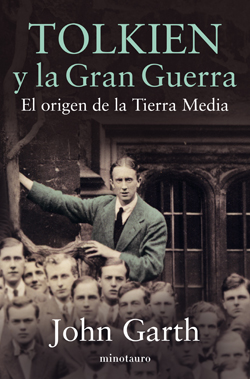 5 June: Tolkien y la Gran Guerra published in Spain by Minotauro.
29 May 2014: My review of Tolkien’s Beowulf: A Translation and Commentary, together with ‘Sellic Spell’, in the New Statesman.
28 May 2014: Spanish daily La Razón publishes a double-page feature on Tolkien y la Gran Guerra. Subscription only.
21 May 2014: Panel discussion on Tolkien and the First World War, éStoria festival, Gorizia, Italy. Watch the discussion here (in Italian and English)...
18 May 2014: I comment on Tolkien’s Beowulf in the New York Times.
15 May 2014: Review in L’Humanité — ‘Si, jusqu’ici, Tolkien ne semble pas avoir l’attention qu’il méritait de la part des écrivains français, la faute sera sans doute réparée avec la traduction d’un ouvrage d’importance, Tolkien et la Grande Guerre, de John Garth… Lisez ce livre. Lisez le Seigneur des anneaux, le Silmarillion, Bilbo le Hobbit. Lire Tolkien ce n’est pas fuir le monde, c’est le rencontrer différement.’
15 May 2014: An exploration of Oxford’s new Story Museum. Oxford Today.
 May 2014: A Companion to J.R.R. Tolkien, edited by Stuart D. Lee, published by Wiley-Blackwell, including my ‘A Brief Biography’.
30 April 2014: I give the Rector’s seminar on Tolkien, Exeter College, Oxford.
16 April 2014: I write on the explosion in migration studies, Oxford Today.
12 April 2014: Guest speaker, Tolkien Society AGM, Hay-on-Wye. My Tolkien and the boy who didn’t believe in fairies is voted best article in the inaugural Tolkien Society Awards. It’s also available in Spanish.
11 April 2014: I interview writer and comedian Ruby Wax, Oxford Today.
8 April 2014: I talk about my book and researches on the German Tolkien Society website. German and English.
6 April 2014: Founder’s Day talk on Tolkien, Exeter College, Oxford.
4 April 2014: I hear from TV historian Lucy Worsley, Arthurian author Kevin Crossley-Holland and Beatles biographer Mark Lewisohn at the Oxford Literary Festival, for Oxford Today.
31 March 2014: I talk to Australian news website The New Daily about Tolkien’s enduring appeal.
27 March 2014:I talk to major German news website Spiegel Online about Tolkien.
25 March 2014: Discussion of Tolkien und der Erste Weltkrieg on Deutschlandradio Kultur.
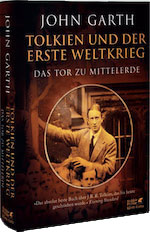 24 March 2014: Tolkien und der Erste Weltkrieg published by Klett-Cotta, with audiobook from Der Hörverlag.
Here, also in German, Marcel Aubron-Bülles talks about translating the book.
22 March 2014: Bring on the monsters! My Guardian preview feature on Tolkien’s forthcoming Beowulf translation is an Editor’s Pick.
19 March 2014: Interviewed in the Guardian and Telegraph and quoted in El País on Tolkien’s Beowulf.
— My review of A Strong Song Tows Us, Richard Burton’s biography of Basil Bunting, published at Oxford Today.
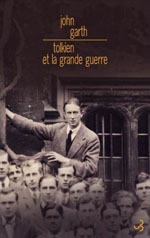 6 March: Tolkien et la Grande Guerre, left, published by Christian Bourgois; highlighted in L’Express and reviewed in La Nouvelle Quinzaine.
5 March 2014: Blog post, Tolkien at fifteen, a warrior-to-be, reveals the facts behind a newly discovered photo. Also in Italian, French and Portuguese.
27 February 2014: Somme feature in El País highlights Tolkien and the Great War.
20 February 2014: Le Monde reviews ‘le passionant essai Tolkien et la Grande Guerre’ in a (subscription-only) piece on the literary impact of the war.
February 2014: Blog posts: Sam Gamgee and Tolkien’s batmen (now also in Portuguese and French) and The Tolkien brothers of Bumble Dell.
— The J.R.R. Tolkien Encyclopedia: Scholarship and Critical Assessment out in paperback and ebook, with several of my contributions.
29 January 2014: Blog post, Tolkien, the Somme, and scholarship. Also in Portuguese.
26 January 2014: ‘100 years of Middle-earth’ – the debut post on my blog. Also in Portuguese at Tolkien Brasil.
6 January 2014: Review, Peter Lewis’s A Rogue’s Gallery, Oxford Today.
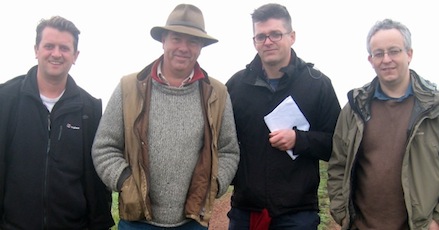 At the old front line, October 2013, with Great War researcher Jeremy Banning, historian Peter Barton and director Sebastian Barfield, filming the BBC2 documentary War of Words: Soldier-Poets of the Somme.
2013
6 December 2013: Review, Ian Wilson’s Little Dictionary of Big Words You Should Know, for Oxford Today.
5 December 2013: Lire special issue previews Tolkien et la Grande Guerre, with extract.
3/12 December 2013: Comments on Tolkien and the First World War, as the Imperial War Museum displays his revolver. The Guardian, MailOnline and The Times.
25 November 2013: Report on the JFK anniversary talk by biographers Randall Woods and Godfrey Hodgson at Oxford’s Rothermere American Institute.
22 November 2013: Tolkien Brasil gives me a regular guest column.
20 November 2013: My appreciation of artist and friend Pauline Baynes – guest column at JJ Books.
14 November 2013: Launch of Exeter College: The First 700 Years, including my contribution on ‘The Undergraduate Tolkien’.
 13 November 2013: On The Oxfordians, a new art group, for Oxford Today.
8 November 2013: Talk to the Oxford Tolkien Society on how Tolkien’s experience in the First World War shaped Frodo in The Lord of the Rings.
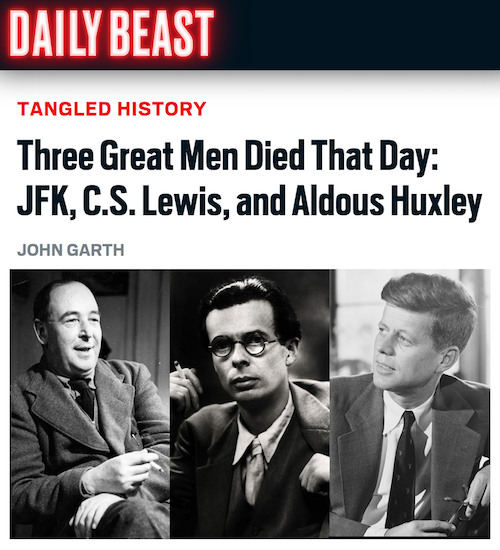
3 November 2013: Long-form feature on the coincidental deaths of JFK, CS Lewis and Aldous Huxley 50 years ago at the Daily Beast. Previously presented as a talk to the Oxford CS Lewis Society and in short form in Oxford Today. I was later interviewed on the topic by Al Jazeera English.
24 October 2013: Filmed an interview with the BBC in and near the trenches of Thiepval Wood for a 2014 documentary on writers on the Somme.
— Reviewed Alison Brackenbury’s poetry collection Then, in Oxford Today.
17 October 2013: Talk: Tolkien’s Dead Marshes, National Army Museum.
16 October 2013: joined Twitter as @JohnGarthWriter.
6 October 2013: ‘Battle of the Somme: the “animal horror” that inspired JRR Tolkien.’ In the Sunday Telegraph’s First World War supplement.
4 October 2013: I talk to the Foreign Office’s Foreign Policy Counsellor in Washington, Jennifer Cole OBE, about her time at Oxford.
 September 2013: My Evening Standard article ‘Tolkien fantasy was born in trenches of the Somme’ is now in Portuguese.
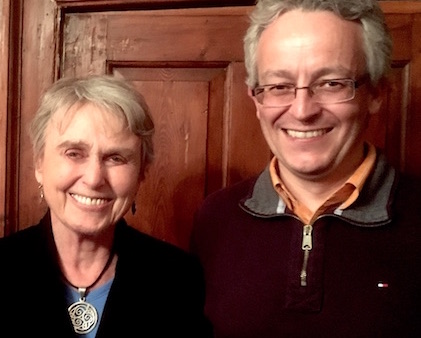
31 August 2013: I talk to Newbery medallist Susan Cooper (with whom I am pictured right) on her new novel Ghost Hawk, at The Daily Beast.
29 July 2013: Talk on Tolkien, British Studies at Oxford summer school, St John’s College.
29 July 2013: Interviewed by Malcolm Boyden on BBC Radio Oxford on the 59th birthday of The Fellowship of the Ring.
3 July 2013: Launched Facebook page, John Garth, writer.
July 2013: Interviewed outgoing Oxford English Dictionary editor John Simpson, in Blueprint. Read here.
July 2013: Review of The Broken Scythe: Death and Immortality in the Works of J.R.R. Tolkien, in Tolkien Studies 10. Read here (Project Muse subscription only).
June 2013: Major feature in The Times on the Bodleian Library’s summer exhibition, Magical Books. Now also available subscription-free here.
June 2013: Houghton Mifflin Harcourt Tolkien and the Great War ebook published.
May 2013: Two-page review of Tolkien’s The Fall of Arthur, at The Daily Beast. Since published in French (September) and Portuguese (November).
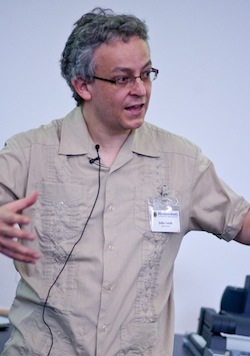 John Garth at the Return of the Ring conference, 2012. Picture: Emil Johansson
April 2013: Landmark interview with Carnegie-winning author Alan Garner in Oxford Today, plus an interview with the 2012 Turner Prize winner, Elizabeth Price.
21 March 2013: Opening talk at the Oxford Tolkien Spring School, on Tolkien’s life.
March 2013: Visited the Oxford Literary Festival for Oxford Today, hearing Alister McGrath on C.S. Lewis and Lucy Hughes-Hallett on her Samuel Johnson Prize-winning biography of proto-fascist Gabriele D’Annunzio.
— Reviewed Mark Atherton’s There and Back Again, on Tolkien and The Hobbit.
5 February 2013: Talk on Tolkien, Oxford C.S. Lewis Society.
25 January 2013: Reviewed Prajwal Parajuly’s The Gurkha’s Daughter, The Guardian.
January 2013: Interviewed on BBC Online and ITV Meridian on Tolkien’s birthday.
2012
December 2012: Interviewed on BBC Radio Oxford’s James Cannon Show on the release of The Hobbit: An Unexpected Journey.
October 2012: Nobel laureate Aung San Suu Kyi’s only print interview from her historic 2012 visit to Britain — in Oxford Today, alongside my interviews with £75million university bursary donor Michael Moritz and biographer Michael Korda.
30 September 2012: Gave a talk on Tolkien via live video feed to the National World War I Museum, Kansas City, Missouri.
19 August 2012: At the Tolkien Society’s Return of the Ring conference I spoke about Tolkien’s close friend Rob Gilson and took part in a panel discussion about research.
3 August 2012: Spoke on the BBC Radio 4 documentary Tolkien in Love about J.R.R. Tolkien’s reunion with his childhood sweetheart Edith Bratt, their marriage, and their wartime separation.
16 June 2012: Hungarian Tolkien Society conference in Budapest: talk on how the First World War shaped the portrayal of Frodo Baggins in The Lord of the Rings. Published in Hungarian in J.R.R. Tolkien: Fantázia és erköles, ed. Dr Pődör Dóra, Nagy Andrea and Füzessy Tamás.
15 June 2012: Q&A with Michael Martinez of the Middle-earth and JRR Tolkien News website.
For older publications and appearances, please visit the relevant pages via the navigation bar at the top of this page.
The Worlds of
J.R.R. Tolkien
UK hardback
US hardback
To buy in French, Russian, Czech, Spanish, Italian, Finnish, Hungarian, German, or another language
see links here
Buy
Tolkien and
the Great War
UK paperback/ebook
US paperback/ebook

Audiobook read by
John Garth
Amazon UK, Audible UK,
Audible US
To buy in Italian, German, French, Spanish or Polish,
see links here
Buy
Tolkien at
Exeter College